Get Full Government Meeting Transcripts, Videos, & Alerts Forever!
Get email alerts on the Education Compensation topic
No spam. Unsubscribe anytime.
Clay County teachers and residents rebuke board after impasse; board defends budget constraints
Summary
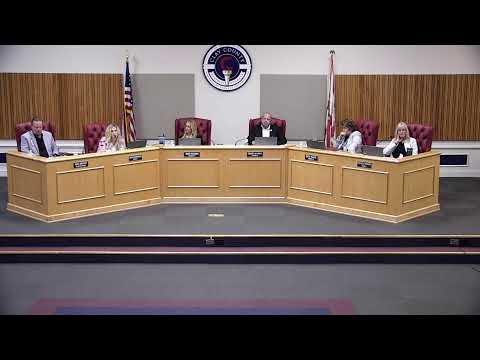
At the Dec. 11 Clay County School Board meeting, dozens of teachers and residents criticized the board for accepting raises for board members while most teachers rejected the district offer and the impasse was imposed; the board said available funds were limited and pointed to charter transfers and co-location costs.
Dozens of teachers, staff and residents told the Clay County School Board on Dec. 11 that recent decisions on raises and an impasse hearing have damaged trust and morale across the district.
Kelly Stadnauer, a teacher who said she has worked in classrooms for more than a decade, described recent personal hardship and said that low pay has pushed her to look for work outside teaching. “I deserve more. I deserve better,” she said, adding that the county’s raise offers make remaining in the classroom difficult.
Liz Crane, a teacher who cited figures from the Florida Education Finance Program (FEFP), challenged repeated statements that funding was cut by the legislature. “It’s not a cut. It’s a transfer,” she said, arguing that public dollars are shifting to charter schools and voucher programs and urging the board and union to unite against that trend.
Several speakers made related charges: that the impasse hearing was predetermined, that board members’ acceptance of a stipend increase sent a discouraging message to classroom staff, and that the district has not provided the line-item budget detail the public has requested. “This board was supposed to be an impartial decision-making body,” said Michelle Forbus, an educator of 27 years, adding that the process she witnessed undermined trust in bargaining.
Speakers also raised operational concerns. Greer Yacovone, a 28-year teacher, urged reductions in administrative overhead and cited a comparative per-student administrative-spend difference in Clay County she calculated to suggest efficiency gains could fund compensation priorities. Shannon Hubie, another teacher and parent, pressed the board to “spend real time in these classrooms” to understand educators’ workload and to pursue more strategic spending decisions.
The superintendent and several board members responded directly during the meeting. Superintendent Broski said the district’s available uncommitted funds were limited, that an independent auditor had identified roughly $1.2 million in discretionary funds in recent negotiations, and that some popular proposals from the union would have cost several million dollars when fully costed by the district. He also explained how co-location of charters can place operating costs on the district and said local voucher/charter-related public funding amounts to about $30 million and is growing.
Board members acknowledged the optics of the situation and reiterated a stated commitment to teacher pay over time. Board member Michelle Hansen and others described efforts in recent years to increase compensation when funds were available; Robert Alvaro was thanked publicly by multiple speakers after he donated his 3% salary increase to a $1,500 scholarship through the Clay County Education Foundation.
What happened at the meeting: the board approved advertised policy revisions, voted to adopt advertised modifications to the 2025–26 student progression plan, and adopted the consent agenda, all by unanimous voice votes earlier in the meeting. The long public-comment period that followed focused largely on pay, transparency, charter funding and district priorities. The meeting closed with board members urging dialogue and promising further workshops and outreach.
Where it stands: speakers urged concrete next steps — a clear 2026 budget plan that prioritizes retention, line‑item transparency for the public and continuing, specific workshops that show month-to-month progress toward improving compensation. Board leaders said they are working on those items but stressed structural constraints and legal limits on what local officials can reallocate.
The board adjourned with holiday wishes and without a new salary agreement; speakers and board members indicated they plan follow-up engagement in the coming months.