Get Full Government Meeting Transcripts, Videos, & Alerts Forever!
Get email alerts on the Public Private Partnership topic
No spam. Unsubscribe anytime.
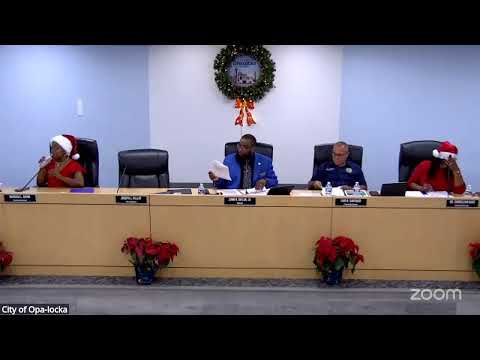
Opa-locka Commission scales back public-private partnership review fee after contentious debate
Summary
After a lengthy exchange over consultant costs and fairness to small developers, the Opa-locka Commission voted 3-1 on first reading to lower its unsolicited public-private partnership review fee from $50,000 to $25,000 while keeping language that allows the city to request additional documented costs as needed.
The Opa-locka City Commission on Dec. 10 voted 3-1 on first reading to reduce the city’s fee for reviewing unsolicited public-private partnership (P3) proposals to a total of $25,000 (a $5,000 initial application fee plus a $20,000 detailed-review fee). Commissioner Bass cast the lone No vote.
Supporters said the change is intended to make Opa-locka more competitive for investment; Commissioner Santiago argued the original $50,000 figure deterred potential partners and asked for a lower, more standard fee. "I don't think it's fair...to make people come here to do business with us and...ask them first for $5,000 then $25,000," Santiago said during debate.
City planning staff and the city attorney defended the higher figure originally proposed, saying some complex P3 proposals can demand outside consultants for deep financial and infrastructure analyses. Planning Director Gregory Gay told commissioners the extra $25,000 in the original draft was intended to cover consultant services when projects require a "deep dive" on water, sewer or financing issues.
The commission’s adopted first-reading motion reduces the base fee while keeping ordinance language that permits the city to request additional documented amounts in writing if the initial fee proves insufficient for evaluation. City Attorney's office said that provision follows state guidance and has been used by other municipalities to ensure staff can hire needed technical expertise.
What it means: The action lowers the upfront cost that a proposer must pay to have a P3 considered by the city, but it does not bar the city from asking an applicant to cover extra consultant work if warranted. The item returns for a required second reading, during which staff will review the ordinance language to ensure the notice-and-additional-fee process is explicit.
Next steps: The ordinance will come back for second reading; staff said they will meet with commissioners to finalize the language governing when and how the city may request additional evaluation funds.