
Everett council amends utility-billing ordinance, delays implementation 90 days after staff-council compromise
Get AI-powered insights, summaries, and transcripts
Subscribe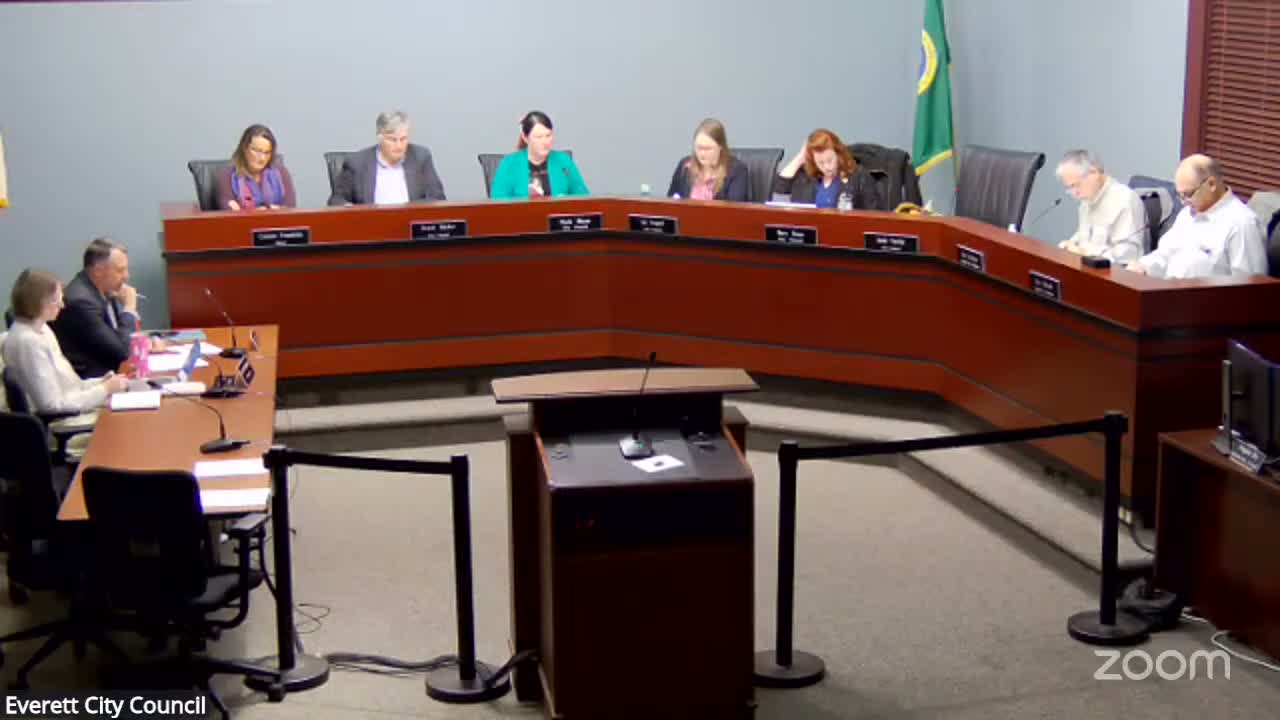
Summary
After extended debate and staff briefings, Everett City Council amended council bill 2512-87 to keep the payment due date at the 20th of the month, add a 10-day grace before delinquency, and set a 90-day delayed implementation to allow system and process work by utilities staff.
Everett City Council on Dec. 17 approved an amendment to an ordinance that changes how the city defines delinquency for water and sewer utility bills, after a lengthy discussion about consumer protections and billing operations.
The council voted to keep the payment due date on the 20th of the month but to strike immediate assessment of the $5 past‑due notice until 10 days after that date, so that an account would not be considered delinquent until roughly 30 days after bill generation. The motion to amend was made by Council member Fosse and seconded by Council member Ryan; councilors voted in favor and then approved a second amendment to delay implementation for 90 days to give staff time to finalize procedures.
Why it mattered: Council members who raised concerns said the earlier practice of assessing fees too quickly had caused hardship for renters, disabled residents and others with narrow payment windows. Council member Fosse framed the amendment as aligning Everett’s delinquency timing with practices used in other nearby cities, saying, “So the twentieth is the date that I heard from you that you wanted to keep,” and proposing a brief grace period before fees could be added.
Staff response and data: City staff described recent operational improvements — a major billing‑system upgrade, online payment improvements, an online leak-adjustment form, and a policy to remove fees for Catholic Community Services–approved clients — and recommended preserving a 20‑day payment window while adjusting delinquency language. A staff member told the council that since the city began sending past‑due notices earlier this year, “we've seen on time payments go up by 25%,” and that automated notifications (texts, calls) are being explored to replace or supplement paper notices.
The council and staff also discussed the tradeoffs of reminder timing and cost recovery. Public Works Finance Manager Sean Bridgeman explained those earlier paper reminders were partly cost-recovery mechanisms for staff time and door-hanger fees but that the city expects automated messages to reduce per-notice costs over time.
Final action and next steps: The council adopted the ordinance as amended, including the 10‑day grace before delinquency and a 90‑day delay in implementation to allow IT and operations changes. The roll‑call vote on the amended ordinance recorded “yes” from Council members Bader, Ryan, Voguely, Fosse, Vice President Zarlengo and President Schwab; the ordinance was approved as amended. Council members asked staff to return with any necessary technical refinements before the ordinance goes into effect and requested an operational update to the appropriate committee during the 90‑day window.
The council’s change preserves the earlier due date residents see on their bill while giving additional time before late fees are assessed; staff said it should reduce surprise charges and allow the planned automated-notification tools to come online before the city relies on them to reduce late payments.