
Londonderry budget workshop highlights health‑insurance spike and a full‑day kindergarten warrant article that leaders say will be tax‑positive
Get AI-powered insights, summaries, and transcripts
Subscribe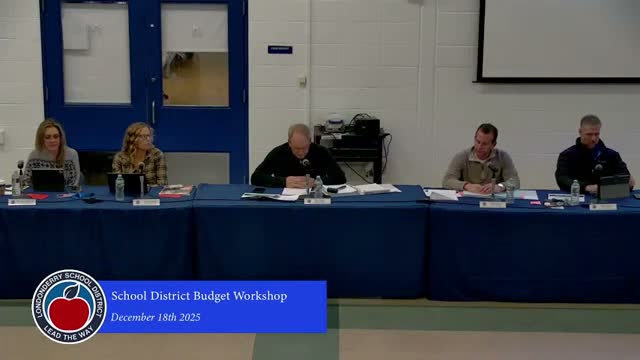
Summary
District administrators told the school board Dec. 18 that health‑insurance costs have jumped sharply this year and outlined a proposed Warrant Article to implement full‑day kindergarten across three elementary schools; officials said the move would reduce operating costs in year one and could raise recurring revenue if enrollment rises.
District officials spent most of the Dec. 18 meeting laying out the draft fiscal 2027 budget, explaining a sharp rise in employee health‑insurance costs and presenting a Warrant Article that would introduce full‑day kindergarten to three elementary schools beginning in 2026‑27.
Amity Small, the business administrator, said personnel costs remain the largest driver of the budget and that the district uses an October 1 head count and collective bargaining agreements to calculate default versus proposed spending. “Our total budget for health insurance had overall a 13.72 increase,” she said, summarizing actuarial notices from the district insurers and noting a range of increases across plans.
Colleen Lewis, the new finance director, walked the board through revenues, saying the advocacy grant (state adequacy funding) and the state property‑tax distribution (SWEPT) remain the district’s largest revenue sources. Lewis also noted that tuition for Hooksett students will be set at $17,910 per student for FY27 and currently generates roughly $1.3 million in local revenue.
On the expenditure side, administrators told the board they are confronting an unusual insurance spike driven, they said, by high‑cost claimants and prescription‑cost changes that reduced prior rebates insurers expected to receive. District leaders described short‑ and longer‑term actions they are exploring — including creating a health‑insurance reserve warrant article to smooth future spikes and negotiating with the town and insurers to seek cost relief.
The meeting’s longest discussion focused on Warrant Article 3, a plan presented by district leaders to move from half‑day to full‑day kindergarten in the three elementary schools. The administration proposed adding up to 14 full‑day sections (class cap 18) district‑wide and using a mix of reallocated staff, one‑year positions and temporary portables while Matthew Thornton undergoes modest reconfigurations. Administrators said the shift is expected to lower the operating budget in year one while increasing state adequacy revenue if enrollment responds to the expanded offering.
The presenters provided a fiscal estimate that in the first year the operating budget could fall by about $200,000 after one‑time costs (furniture ~$100,000, curriculum ~$50,000, moving interior walls ~$200,000 and portable relocation ~$120,000 one‑time with an ongoing lease of about $46,000). They projected roughly $548,000 of additional revenue tied to increased pupil counts and adequacy aid, and staff reductions through attrition and reassignments that, they said, would not eliminate jobs but would change assignments and hours. The administration characterized the first‑year net effect as cash‑positive for taxpayers and cautioned that actual results depend on enrollment trends.
Board members and residents asked how the plan would affect LEAP/preschool programming, midday bus runs, and wrap‑around care. Administrators said the LEAP program at Moose Hill would remain intact, the YMCA and local after‑school providers could continue to serve kindergarteners for before‑ and after‑school care, and that midday bus savings factored into the financial model.
During the budget workshop other departments presented their requests: the music program reported about 2,500 students served annually and line‑item needs for instrument repair, uniforms and transportation; the IT department proposed a $1,176,975 operating budget (about 1% of the district total) with most growth driven by hosted software and additional security and monitoring packages; and buildings & grounds detailed capital reserve priorities including a Matthew Thornton roof replacement and $100,000 in field maintenance funds.
The board asked administrators to refine figures, promised another targeted review before January votes, and signaled an intent to circulate Warrant Article language and implementation details to families before voters consider the article in March. The budget process continues through January hearings and will be finalized before the town warrant.