Get Full Government Meeting Transcripts, Videos, & Alerts Forever!
Get email alerts on the School Funding topic
No spam. Unsubscribe anytime.
Perrysburg superintendent warns pending Ohio bills would curb local tax growth and squeeze school budgets
Summary
Superintendent Dr. Katie Anstead told the Perrysburg Board of Education that inflation-adjusted state funding for public schools is at its lowest since 1997 and summarized four House bills on the governor’s desk she said would limit property tax growth and complicate local levy revenue.
Dr. Katie Anstead, Perrysburg Schools superintendent, told the Board of Education on Nov. 24 that inflation-adjusted state funding for Ohio public schools is now the lowest since 1997 and that state choices since 2019 have shifted new state dollars toward charter and private school tuition subsidies.
"Since universalizing ed choice in 2019, state investment in public schools has dropped by 16%," Anstead said, and she told the board that the district’s long-term finances remain vulnerable even after the district’s recently passed levy.
Why it matters: Anstead described four bills she said were sitting on the governor’s desk — House Bills 129, 186, 309 and 335 — and summarized how each, as passed by the legislature, would affect local levy revenue or property tax treatment. She said changes would include allowing county budget commissions more authority to reduce levies, capping certain inside millage increases, and changing how emergency and substitute levies count toward a district’s 20-mill floor calculation. "In summary, these bills reduce or cap local property tax growth and assessed values," she said, and added that combined with flat state funding, the legislative package would weaken districts’ ability to raise local revenue.
What the bills do (as described to the board): Anstead said House Bill 129 keeps a district's 20-mill floor calculation intact while allowing some emergency and substitute levies to be renewed as fixed-sum levies; she said the Senate made changes favorable to schools, including allowing multiple renewals of some levies. She summarized House Bill 186 as an inflationary cap on 20-mill floor districts that retains a $465,000,000 reimbursement provision quoted in the presentation. House Bill 309, she said, would allow county budget commissions to reduce levies for taxing jurisdictions and shortens a proposed five-year prohibition on reducing newly approved levies down to one year. House Bill 335, she said, caps inside millage to the cumulative inflationary rate for the three-year appraisal cycle with modest Senate amendments to the House version.
Board and staff reaction: Board members and the treasurer discussed modeling to measure the local impact. The treasurer (name not specified in the transcript) said the district’s long-term forecasts had projected multi‑year deficits without levy revenue and that initial simulations of the legislative changes showed a potential negative impact beginning in fiscal year 2028. The treasurer said some published simulations (LSC's simulation, as cited in the meeting) produced numbers he considered inaccurate and that the district was preparing its own models for the finance committee.
Uncertainties and next steps: Anstead repeatedly noted the bills were awaiting the governor’s signature and that details and practical impacts remained to be clarified: "We're waiting on the governor to see if he signs these into law," she said. The board asked the administration to continue modeling and to provide updated projections for the December finance committee and the board.
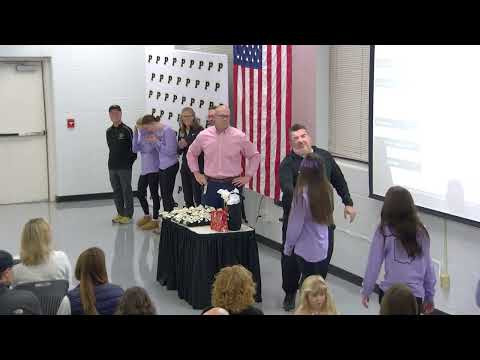
Context: At the meeting the superintendent also called for local civic engagement, saying district-organized grassroots advocacy and collaboration with local elected officials could help get lawmakers’ attention in Columbus. She noted districtwide PBIS recognition and other district accomplishments while urging continued public engagement on school funding.
What’s next: The administration said it will refine its fiscal models and report back to the finance committee and the board in December with scenario analyses tied to the bills’ final language and any actions taken by the governor.
Sources: Superintendent Dr. Katie Anstead’s report to the Perrysburg Board of Education on Nov. 24, 2025, and the board’s finance discussion during the same meeting.