Get Full Government Meeting Transcripts, Videos, & Alerts Forever!
Get email alerts on the Transportation topic
No spam. Unsubscribe anytime.
Titus County holds workshop on proposed I‑30 weigh station; DPS presents inspection numbers and technology; commissioners seek financial data
Summary
County officials and DPS representatives discussed a proposed I‑30 weigh station and truck parking project. DPS described 7,343 inspections, 733 vehicles removed from service and 315 citations (fiscal year window presented); commissioners asked for multi‑year revenue and enforcement data and said they will file records requests and consider applying for a State Infrastructure Bank loan to get precise loan terms.
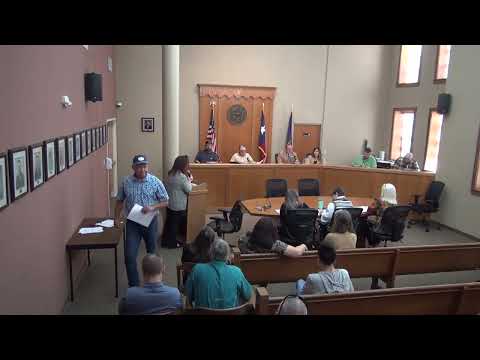
Titus County commissioners held a public workshop following a special meeting to review a proposed I‑30 weigh station and truck parking facility and hear from Texas Department of Public Safety (DPS) representatives and county staff about operations, enforcement and financing.
A DPS enforcement officer who presented (identified in the record by attendees as a trooper and addressed in testimony by name at later points) described recent enforcement activity in Titus County. "Out of that year...7,343 inspections were conducted in Titus County," the presenter said, adding that officers removed 733 vehicles from the road as unsafe and removed 144 drivers from service. He said 315 citations were issued and 5,392 warnings were given during the fiscal period he reviewed. He also described the proposed technology for a new facility: license‑plate readers, over‑weight sensors and automated screening that would flag trucks for inspection as they approach the scales.
Commissioners and members of the public asked detailed questions about staffing, revenue and legal process. The presenter said three civilian inspectors are currently assigned to the weigh station and that staffing expansion would depend on available space and equipment at the site. On the question of where citation revenue is recorded, the treasurer's office described monthly reporting and a general‑ledger process that routes state fees to a state fee fund and other fines into county accounts; attendees raised concerns that current accounting practices may distribute related revenue across multiple departmental lines, making it difficult to present a holistic revenue number from the weigh station alone.
Holly Parker said she will file records requests for multi‑year citation, inspection and budget data from JP offices, the motor carrier bureau and TxDOT and will review other counties (Seguin and Guadalupe) as examples. "You cannot ask me, a voter, to vote on this if you guys don't understand the process," Parker said, urging that the court gather full financial and operational data before proceeding to a public vote.
The court discussed financing options. Judge and staff described the State Infrastructure Bank (SIB) application as a non‑binding way to get loan terms and possibly lock a favorable interest rate; TxDOT representatives (not present in person) were described as the agency that would handle construction bidding and inspection, while the state would own truck parking facilities and be responsible for facility operation. County speakers stressed the importance of service‑level agreements should the county move forward, so staffing and operation hours do not create revenue shortfalls if the facility is not actively manned.
No formal financing decision or county obligation was taken during the workshop; several commissioners recommended starting the SIB application process so the county can receive firm numbers for interest rates, payment schedules and cost projections. Multiple speakers emphasized that detailed records and a full business‑plan analysis are required before making a final decision.
The court adjourned after further comments and an expressed plan to compile the requested data. The transcript records that the meeting will continue its due diligence, including visits to existing facilities and the submission of records requests to clarify revenue, staffing and enforcement trends.