Get Full Government Meeting Transcripts, Videos, & Alerts Forever!
Get email alerts on the Sewer topic
No spam. Unsubscribe anytime.
Water, sewer departments report compliance gains, CSO plan timeline
Summary
Findlay water and wastewater staff reported full NPDES compliance in 2025, progress on combined‑sewer overflow monitoring and a November 2026 addendum target for the Long‑Term Control Plan; the water system also reported no remaining city‑owned lead service lines.
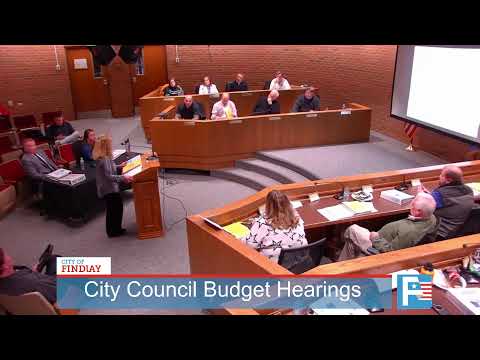
City utility managers reviewed recent operations and compliance work and spelled out expected milestones for infrastructure planning.
Seth, assistant superintendent at the Water Pollution Control Center, reported that the plant achieved full NPDES permit compliance in 2025 and that three smart‑cover flow meters were installed at combined‑sewer overflow (CSO) locations to produce the data needed for a hydraulic model used in the Long‑Term Control Plan. He said the addendum updating the CSO plan is due to the EPA in November 2026 and that the city expects to present draft alternatives to council in 2026 as modeling and EPA review proceed.
Water Superintendent Jason Phillips described progress on the water‑system master plan with Arcadis — a comprehensive review of reservoirs, raw‑water conveyance, treatment and the distribution system — and highlighted near‑term capital work including riprap at Reservoir 2 (scheduled for 2026) and plans to continue reservoir protection work thereafter. He also said the city completed its inventory of lead service lines on the public side and now reports no city‑owned lead services; outstanding customer‑side iron services number 27 and will be addressed over time.
Both utility leaders noted energy‑saving efforts (solar panels at the plant) and that electrical and chemical costs remain notable budget pressures. Seth said summer solar performance had the system operating near 85% of capacity when technicians last serviced the array. Council members asked about timelines and costs for long‑term CSO alternatives; engineering and the sewer utility said draft cost estimates will appear next year as modeling concludes.
The next steps are review of the CSO addendum and presentation of alternatives in 2026 and finalizing the water master plan results and recommended capital schedule to feed into the capital plan process.