Get Full Government Meeting Transcripts, Videos, & Alerts Forever!
Get email alerts on the Public Safety topic
No spam. Unsubscribe anytime.
Police and fire detail 2026 spending, staffing and technology plans
Summary
Findlay public‑safety leaders described the 2026 requests: the police requested roughly $14.2 million for patrol, detectives, dispatch and disaster services and noted staffing shortages and body‑worn camera/analytics costs; the fire department emphasized staffing, new engine delivery and a cancer screening program funded via grants and union negotiation.
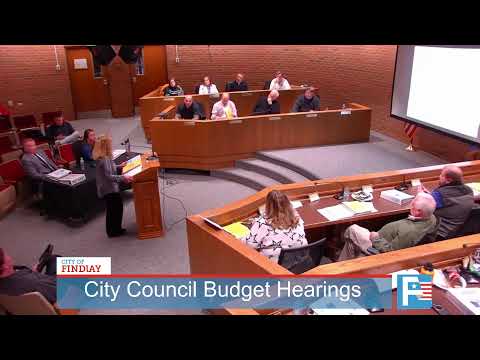
Police and fire leadership laid out their operating priorities and budget drivers for 2026 at the Findlay budget hearing, stressing staffing, equipment replacement and training as central needs.
Chief Mathias (police) presented a department operating request that includes patrol, detectives (vice/narcotics), dispatch and disaster services. The slide materials and department remarks documented staffing gaps — an authorized patrol complement of 69 and current sworn strength in the low‑ to mid‑60s — and cited overtime and software as major cost drivers. The police briefing said the department is advancing body‑worn‑camera and in‑car camera contracts (Axon) and analytics tools (Trulio) that increase recurring software expenses, and described recent grant awards: a state selective traffic enforcement grant and impaired driving enforcement grant that together account for roughly $36,000 in reimbursable overtime funding. Chief Mathias noted recruitment improvements after contractual wage increases and said several candidates are in the academy.
Fire Chief Josh Eberle described operations and capital needs for the fire department, noting 65 sworn personnel (61 assigned to suppression), four stations and an average response time just over four minutes. Eberle highlighted safety and prevention programs, including a smoke alarm installation initiative (264 alarms installed in 2025) and a union‑negotiated cancer screening program that provided tests for active personnel, spouses and retirees. The department reported receipt of federal AFG (Assistance to Firefighters Grant) funds that subsidized equipment and training and identified capital work including engine replacement (Engine 3 scheduled for stationing at Station 3) with delivery and final inspection in the first quarter of 2026.
Council members pressed both departments on staffing numbers, the burden of overtime and how software and capital costs are allocated and charged. Police representatives said the department is working to limit overtime by pulling detectives back to patrol when necessary, maintaining training pipelines and seeking grant support. Fire leaders emphasized the combined training facility (the STRiCT Center) and external partnerships that they say generate training and revenue opportunities but noted the magnitude of capital costs for apparatus and reservoir safety items.
Both departments identified wellness and peer‑support programs and said they will continue to pursue federal and foundation grants to offset recurring and one‑time costs. The next procedural step is continued review of budget summary sheets and formal adoption of departmental request within the overall 2026 operating budget.