Get Full Government Meeting Transcripts, Videos, & Alerts Forever!
Get email alerts on the Budget Overview topic
No spam. Unsubscribe anytime.
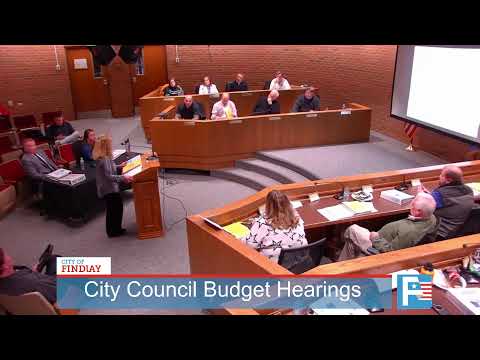
Findlay mayor, auditor outline 2026 operating budget and fund subsidies
Summary
City leaders presented the proposed 2026 operating budget, described the general fund as the primary operating account, and flagged required subsidies for restricted funds (streets, pool, airport, parking) and options to call or refinance debt to save money.
Findlay City officials presented the proposed 2026 operating budget during a multi‑hour public hearing, laying out where revenue will come from and how restricted funds will be supported.
Mayor (identified in the record as Mayor) opened the hearing saying, “We will be looking at the 2026 operating budget,” and reviewed key budget concepts: the general fund as the primary operating account, enterprise funds for water, sewer, the airport and parking, and a separate capital improvement fund funded by 20% of income tax revenue. The mayor also explained that departmental operating flexibility is necessary to let managers shift funds among object codes when unexpected costs arise.
Deputy City Auditor Ginger Sampson and the City Auditor walked council through the fiscal mechanics of the budget. The auditor said the city must obey state budget rules and warned that fiscal officers are legally responsible to avoid deficits: “you will not break these laws. You will never spend 1p more than you have in projected revenues and resources.” The auditors’ office identified mandatory general‑fund subsidies to special funds — the street construction, maintenance and repair (SCM&R) fund, pool, airport and parking funds — that together reduce the cash available for other uses. The SCM&R subsidy is estimated to fall from prior years but remains substantial; airport and parking both show increased subsidy needs in the 2026 projection.
Ginger Sampson explained how those subsidies function: special funds are intended to operate on their own, but limited revenue (gas tax, user fees, lot rent) requires transfers from the general fund for the operating budgets as proposed. She also described the self‑insurance fund, pension fund flows tied to property tax millage settlements, and the mechanics of debt service and refinancing options. The auditor’s team said the city’s overall debt has declined in recent years and noted a possible opportunity to call or refinance debt, which could create multi‑hundred‑thousand‑dollar savings.
The administration and finance staff said the budget will be refined as year‑end numbers arrive and that the council will adopt the final operating budget at the first council meeting in January 2026. The auditor recommended council review capital and subsidy items carefully and consult the city’s municipal adviser before issuing any new debt.
The next procedural step identified was a February capital plan presentation to provide detail on projects and any additional subsidies tied to capital decisions.