Defense says courthouse victims monument biased jury; state calls claim waived and harmless
Loading...
Summary
In oral arguments on appeal, defense counsel William Gill said a courthouse monument to "Sullivan County victims of violent crime" and related court speech conveyed partiality and exposed jurors; the state urged the court to affirm, saying the claim was waived and any exposure would be harmless given overwhelming evidence of guilt.
William Gill, an attorney with the Appellate Division of the Public Defender's Office, told an appellate panel that the core issue on appeal is "speech" — specifically the message sent by a courthouse monument and whether that message deprived Randall Neece of a trial before an impartial tribunal and jury.
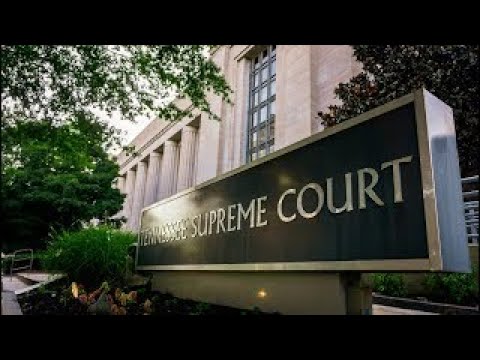
Gill pointed to the monument outside the Sullivan County Justice Center, which his brief depicts as pillars inscribed to "Sullivan County victims of violent crime," and argued the monument communicated partiality toward victims. "A court's monuments and symbols are a form of speech," Gill said, urging that the monument's presence and visibility to jurors undercut the court's impartiality instructions.
A recurring line of questioning from the bench focused on exposure: whether any juror actually saw the monument and whether mere passage by a monument is enough to establish the constitutional exposure the defense must show. Gill acknowledged there is no juror testimony in the record but said the state conceded on the record that the monument was "plainly within the line of sight" of jurors and that anyone walking in or out of the courthouse would be exposed to it.
The state, represented by Garrett Ward, urged the court to reject the claim in full. Ward argued Neece's challenge was waived because his pretrial filings sought a change of venue and did not preserve the distinct legal theory that a juror was exposed to improper information during trial. Ward also emphasized the lack of evidentiary development at the motion-for-new-trial hearing: "No jurors were called. No courtroom officers were called," he said, arguing the record is at best silent about whether any juror actually saw or understood the monument's message.
Ward further urged that even if the exposure burden were met, the state had shown any exposure would be harmless. He recounted pieces of the state's proof — a recorded confession, defendant statements to a girlfriend, steps the defendant took to conceal the killing from a child in the home, and a recorded audio exhibit the state said captures the defendant saying, "I'm glad she's gone" — and described that cumulative evidence as dispositive: "I'm not certain I've ever seen stronger evidence of guilt of premeditated murder," Ward told the court.
Gill disputed the state's characterization of the concession and of the preservation question, arguing a properly framed motion for change of venue that cited the constitutional authorities at issue put the state on notice and preserved the exposure claim for appeal. He also urged that the legally relevant showing for the exposure prong is simply that a juror was exposed to the monument and that the record here indicates jurors walked past the installation repeatedly during a three-day trial.
The panel questioned whether voir dire remarks (in which the prosecutor asked whether anyone had seen a monument and received no affirmative response) undercut a later exposure claim and whether counsel's failure to call jurors at the motion-for-new-trial hearing meant the defendant failed to meet his burden. Gill said voir dire responses do not foreclose exposure later in a multi-day trial and repeated that the state's concession and the record photographs support his view.
The court concluded oral argument after the parties' exchanges and invited the next matter. The appeal will turn on the panel's assessment of (1) whether Neece preserved a distinct improper-information/exposure claim apart from his venue motion, (2) whether the record supports a finding that at least one juror was exposed to and could understand the monument's message, and (3) if exposure is established, whether any exposure was harmless in light of the state's evidence.
The court did not issue a ruling during the argument.