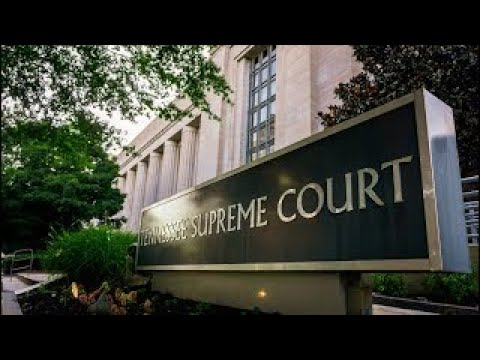
Appellate panel weighs whether dying declaration naming 'Seth' should have been admitted in Denton murder appeal
Loading...
Summary
At oral argument, defense urged that a dying declaration identifying the shooter lacked the necessary perception and foundation; the state argued that naming an assailant creates a rebuttable presumption of perception and urged the court to affirm. The panel questioned burden and whether seeing a gun implies seeing the shooter.
An appellate panel heard argument over whether a dying declaration identifying the shooter was admissible in the 2015 Sullivan County triple-homicide convictions of Robert Denton.
At the outset, defense counsel summarized the case facts: Denton was convicted of three counts of first-degree premeditated murder after the state says he entered his grandparents’ kitchen with a rifle and killed his mother, grandmother and stepfather while six children, including an eight-year-old identified in the record only as CP, were present. Counsel told the court the appeal raises three issues: sufficiency of evidence for aggravated assault as to a child in the kitchen (identified in the record as SH), the admissibility and competency foundation for a dying declaration attributed to Mr. Millhorn, and disputes over certain photographs admitted at trial.
Defense counsel focused most of argument on the dying-declaration issue. Counsel said Mr. Millhorn, the wounded declarant, was found outside the home paralyzed and bleeding after two gunshot wounds, and that he told both his father-in-law, Mr. Rose, and an EMT that “[the defendant] shot me.” Counsel argued trial counsel did not object to the dying-declaration admission and contended the trial court abused its discretion in finding the declarant’s identifying statements sufficiently founded for admissibility under the Tennessee rules of evidence. Counsel emphasized medical testimony (Dr. Eugene Scheuerman) that the shots were fired from behind and that one wound immediately paralyzed Millhorn’s lower body, which, defense counsel argued, undercuts any claim Millhorn had the opportunity to perceive and identify the shooter.
Members of the panel pressed defense counsel repeatedly on whether perceiving a firearm necessarily means perceiving the person firing it. A judge asked, in effect, if the declarant was able to see “a long gun,” doesn’t that suggest he saw the shooter. Defense counsel replied the ability to see a firearm is distinct from the ability to identify a person and urged that the trial court had an obligation to resolve such credibility and perception questions before admitting a dying declaration.
The court and counsel also discussed whether the declarant’s remark might be treated as a lay opinion under Rule 701 — a rationally based inference rather than direct perception — and whether that would alter the admissibility analysis. Defense counsel cited case law cautioning against admitting lay opinion as the foundational basis for a hearsay exception unless the opinion appears reasonably based on personal perception.
On the related claim about aggravated assault and whether the evidence was sufficient as to the child SH, the panel asked defense counsel to distinguish Emerson, a case permitting an inference of fear from gunfire heard or seen nearby. Counsel acknowledged circumstantial evidence can sustain convictions but said the sufficiency challenge turns on the required mens rea (intentional or knowing versus reckless) and on potential inconsistent verdicts in the record.
State counsel Jim Gaylord argued that when a dying declarant specifically identifies his assailant by name, the court should presume the declarant had the opportunity to perceive the event and identify the person, and that the presumption is rebuttable only by clear evidence that the declarant lacked that opportunity. Gaylord cited State v. Land and other authority the state says treat similar statements as laying an adequate foundation. He urged a high rebuttal standard (describing it as clear and convincing) to avoid collapsing admissibility into a pure jury credibility determination. Gaylord also pointed to an earlier dying declaration in the record in which Millhorn identified a “long gun,” Millhorn’s sustained lucidity and statements after being shot, and Dr. Scheuerman’s testimony about the weapon as support for admissibility.
Both sides exchanged brief final remarks. Defense counsel quoted from their brief and State v. Lewis to argue a lay opinion by a deceased identifying a defendant should not be admitted without a reasonable perception foundation and asked the court to reverse and grant a new trial. The state urged the panel to affirm the convictions. The court thanked counsel and called the next case; no ruling was announced during argument.
The issues the court pressed — whether naming an assailant gives rise to a strong evidentiary presumption of perception, what burden should govern rebuttal of that presumption, and whether seeing a weapon is tantamount to seeing the shooter — will determine whether the dying declarations admitted at trial were rightly considered for the jury and whether any error was harmless.