Lifetime Citizen Portal Access — AI Briefings, Alerts & Unlimited Follows
FWC reports progress on Mill Pond hydrilla control; 200 grass carp stocked, additional spot treatments possible
Loading...
Summary
FWC regional biologist reported recent herbicide applications and the stocking of 200 grass carp (about 1,000 stocked since March 2023) that are expected to help reduce hydrilla; staff said most treated areas appear brown and dead and recommended spot treatments as needed.
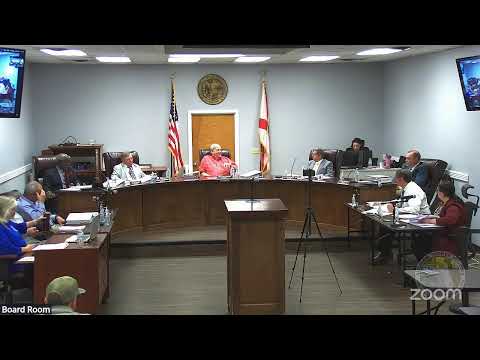
At a Jackson County Board meeting, a Florida Fish and Wildlife Conservation Commission regional biologist updated commissioners on Mill Pond invasive vegetation control and fish management.
Derek Fussell said an early‑September 560‑gallon drip application produced limited persistence after damage to the dam increased flow, so staff followed up on Nov. 5 with an airboat application of Procellacor. Fussell reported satellite and on‑the‑ground observations showing treated hydrilla within the application area is brown and collapsed. He also said the county recently stocked an additional 200 grass carp, bringing the total stocked since March 2023 to about 1,000. Fussell said grass carp take about 15–17 months to reach effectiveness and that the 2023–2024 stockings are now contributing to hydrilla reduction.
FWC staff have conducted snorkeling transects to monitor tilapia — an illegally introduced fish — and observed grass carp actively feeding on hydrilla in transects. Fussell described tilapia as primarily algae eaters and noted they can be prolific breeders; while tilapia may provide a forage base for bass in the pond, they are difficult to remove by electrofishing and can be hard to harvest at scale.
Fussell said future management will be adaptive: if limited regrowth is detected in the spring, staff will treat targeted areas; if not, a full‑pond application may not be necessary. Historical patterns in nearby systems suggest two years of repeated seasonal applications were previously successful. Commissioners thanked FWC for continued involvement and discussed maintaining committee oversight as work continues.
What’s next: FWC will monitor regrowth and recommend spot or full‑pond treatments if necessary; officials said the agency has committed to continue supporting control work as needed.
Representative quote: “From what I’ve looked at, our satellite imagery and on the ground looking at the hydrilla, everything within the treatment area is brown and fallen down dead looking,” Fussell said.