Forsyth County Schools highlight CCRPI breakdown and record 97% graduation rate
Summary
District leaders presented a detailed CCRPI component review to the Board of Education, emphasizing a record high graduation rate (reported at 97%/97.07% five‑year rate) and explaining volatile 'closing gaps' flags tied to rising state targets.
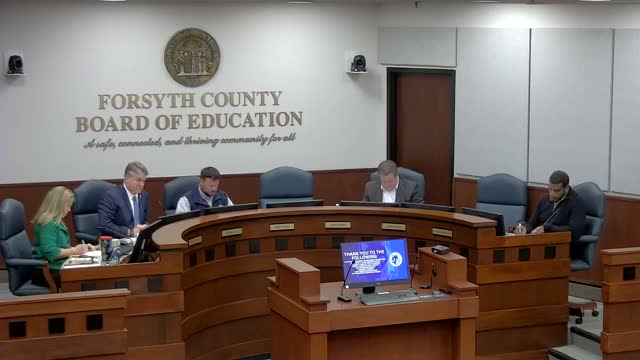
Dr. Amy Bartlett and Tim Keyser presented Forsyth County Schools’ CCRPI (College and Career Ready Performance Index) results to the Board of Education on Dec. 9, highlighting component scores, subgroup targets and a district record graduation rate.
The presentation explained CCRPI’s five components — content mastery, progress (growth), closing gaps (subgroup targets), readiness (attendance, accelerated enrollment, pathway completion) and graduation rate — and how the state weights and calculates each. Bartlett and Keyser described the flag system used for subgroup targets (green, yellow, red) and why the closing‑gaps component can appear volatile when baseline targets are raised after strong performance.
"CCRPI is our state's college and career ready performance index," Bartlett said, noting the state provides both component data and a separate single score produced by the Governor’s Office of Student Achievement (GOSA). Keyser walked the board through examples of how growth percentiles and baseline resets translate into component points.
The presenters pointed to a district milestone: a record high graduation rate, reported in the presentation as 97% (the five‑year adjusted cohort rate was listed as 97.07%). Board members asked clarifying questions about interpretation of red flags in the closing‑gaps metric; presenters emphasized that some red flags reflect raised targets following strong prior performance rather than sudden declines in absolute achievement.
Bartlett said the CCRPI data are a tool for continuous improvement and that principals and leadership teams are conducting school‑level data dives to set targeted action plans. The presenters noted the CCRPI data are lagging (some readiness indicators are reported a year behind) and urged caution when comparing single‑year results without context.
The presentation closed with an invitation for further discussion; no formal action on CCRPI was required at the meeting.
The board took no vote on CCRPI; the presentation was characterized as information for school improvement planning and community transparency.