Lifetime Citizen Portal Access — AI Briefings, Alerts & Unlimited Follows
Houston County planning commission hears hours of public comment on draft solar ordinance and agrivoltaics
Loading...
Summary
A public hearing drew farmers, renewable-energy developers and a utility to debate a draft ordinance that would allow limited commercial solar and agrivoltaic dual-use on some prime soils; commissioners asked staff to revise the draft for further review in November.
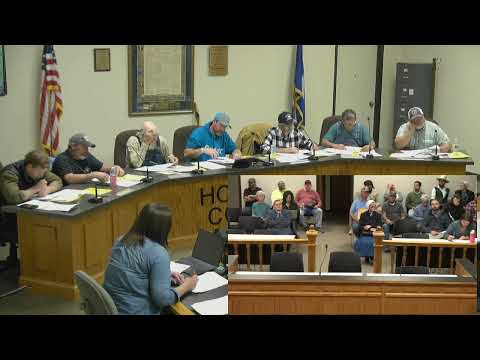
The Houston County Planning Commission spent the evening hearing detailed public comment on a draft commercial-solar ordinance that would allow limited commercial solar development and, in some cases, agrivoltaic dual-use (solar plus agricultural grazing or crop production).
The hearing opened with staff reading the public notice under Minnesota Statute 394.26 and summarizing revisions prepared by the Great Plains Institute, including a new agrivoltaics section that would exempt some prime soils from the usual restrictions if projects adopt a management plan and soil‑health protections. Staff said the county’s moratorium ends in December and asked the commission for direction before returning a revised draft in November.
Supporters at the hearing described agrivoltaics as a way to keep farms viable. "Grazing sheep under solar panels hits all of those things," said Ryan Herman, a Houston County sheep farmer who described converting land to grass and using rotational grazing beneath panels. Developers and operators said modern projects use driven piles (not concrete) and include decommissioning bonds and warranties; Kent Whitcomb of MiEnergy cooperative said his cooperative has completed several local projects and that distribution‑scale solar can reduce wholesale power costs and help meet carbon‑reduction goals.
Opponents and some commissioners cautioned against allowing solar on prime agricultural soils. Several speakers urged preserving prime farmland and asked the county to require limits on project size and strong decommissioning and bonding provisions. "I view this solar as a piece of infrastructure for the growth of our farm," said landowner Sherry Allen, who told commissioners the panels are part of a broader plan that includes livestock and potential grain storage; others answered that converting prime soils carries risks for long‑term food production and local character.
Commissioners pressed staff on practical limits and tradeoffs: how large projects would need to be to be economically viable for developers and utilities, which types of soil or topography are suitable, and whether the county must amend its comprehensive land‑use plan to permit commercial projects on prime soils. MiEnergy staff said most distribution‑level projects that make sense for the cooperative are near substations and typically range up to about 5 megawatts (roughly 12–25 acres), and that locating projects farther from infrastructure raises interconnection costs.
After more than two hours of public comment and technical presentations, commissioners did not make a final recommendation. Instead they asked staff to incorporate the range of public input — including suggested acreage caps, requirements for agrivoltaic management plans, decommissioning bonds and screening — and bring a revised draft back for formal review in November so the board can consider final action in December.
The planning commission’s recommendation will be advisory; final approval of any ordinance changes or comp‑plan amendments rests with the Houston County Board of Commissioners.