Get Full Government Meeting Transcripts, Videos, & Alerts Forever!
Get email alerts on the Public Camping Ordinance topic
No spam. Unsubscribe anytime.
Jacksonville aldermen debate public camping ordinance as downtown business owners press for action
Summary
Aldermen and residents spent the workshop discussing a proposed public camping ordinance focused on enforcement, storage of confiscated property and modest fines; South Jacksonville’s police chief and shelter director offered differing views on outreach, enforcement and mental-health options.
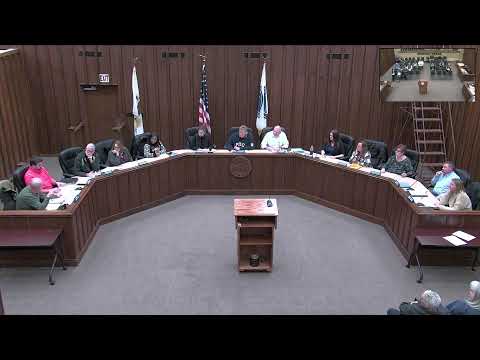
Jacksonville aldermen discussed a draft public camping ordinance during a workshop Dec. 1, prompted by repeated downtown complaints about harassment, vehicle camping and property damage. Alderman Williams, chair of Special Studies, said the committee favored modest fines and a shorter citation lookback period to avoid punishing people trying to exit homelessness.
The draft, Williams said, should avoid becoming a “money-making project” and instead ‘‘keep a little skin in the game’’ with smaller fines; the committee recommended considering a 12-month window instead of 24 months for counting prior citations. The city attorney also urged simplifying the fine schedule so staff do not need to track the timing of individual violations.
Chief Hansel of South Jacksonville described his city’s ordinance, passed about a year ago, as primarily targeted at a subset of repeat offenders who refuse services. “Our ordinance…is for the 20% that don’t want to help,” he said, and described a sequence of outreach, a 24-hour notice and property removal with storage requirements (he said his city stores property for 60 days). Hansel said his department attempts offers of help before removal and uses foot and vehicle patrols to keep problem encampments cleared.
Business owners and downtown residents told the council they want action sooner rather than later. One business owner described repeated nighttime incidents — including people causing disturbances and entering private property — and said staff and customers have felt unsafe. Felipe Alpano, speaking as part of Main Street, warned that allowing unlimited vehicle camping on the square would displace customer parking and hurt local commerce.
Not all commenters agreed the ordinance is a panacea. Rob Thomas, a local landlord, asked how an encampment clause would stop targeted harassment in a parking lot and said increased patrols may be more effective than a broad ordinance. David Bergman, director of New Direction Shelter, said many people causing trouble have mental-health needs and that hospitals sometimes send individuals to the shelter; he recommended examining court-ordered treatment options under the mental-health code for people who are dangerous to themselves or others.
Council members raised practical questions about enforcement and logistics: which agency will enforce citations; how to handle private-property camping with owner permission; who will remove and store belongings deemed salvageable; and how to prevent staff exposure to biohazards during cleanup. The clerk and others proposed a shared case-tracking system (the transcript identified a product called “Caseworthy”) so police, social services and hospitals can share status on individuals who repeatedly refuse services.
Aldermen voiced interest in quicker action but emphasized further committee work on revisions before a formal council vote. Williams asked the special-studies committee to finalize recommended changes and bring the ordinance forward with clearer language on fines, timeframes, enforcement responsibilities and property-handling procedures.
The workshop closed with recognition that the problem involves both enforcement and social services: several speakers urged the city to pair any ordinance with stronger coordination among police, social services and treatment providers. The council did not adopt the ordinance at the meeting; members asked staff to return with revisions and implementation details for a future council vote.