Get Full Government Meeting Transcripts, Videos, & Alerts Forever!
Get email alerts on the Zoning topic
No spam. Unsubscribe anytime.
Knoxville council approves zoning package with RN1/RN2 pulled for further review after heated debate
Summary
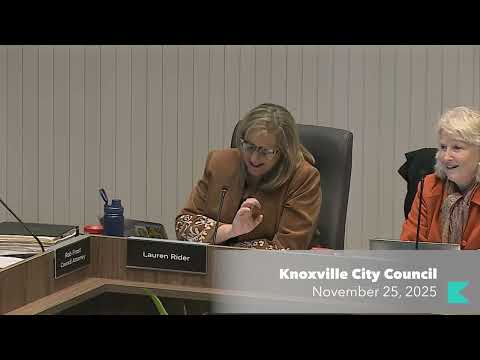
After hours of public testimony and council debate over whether single-family attached dwellings should be allowed in low-density neighborhoods, council voted to approve an amended zoning change but removed RN1 and RN2 from that approval and sent those portions back to planning for further review.
Knoxville City Council approved most of a proposed zoning amendment to create a new use category, "single-family attached dwellings," but voted to remove RN1 and RN2 references and refer those components to the planning department for additional study. The ordinance, as amended, proceeds for districts outside RN1 and RN2 after a night of robust public comment and multiple council amendments.
The proposal would amend the city zoning code (appendix B) across several articles to allow single-family attached housing — units that share a party wall but can be individually owned — in more residential districts. Supporters, including neighborhood residents Sarah Dugger, Suzanne Stevens and Drew Harper of Yes, Knoxville, told council the change would increase homeownership options and help meet housing demand without overwhelming infrastructure. "Passing this amendment would create more opportunities for home ownership," Sarah Dugger said in the public forum.
Opponents warned it could alter the character of long-established RN1 and RN2 neighborhoods and urged added design standards before the code change took effect. Stewart O'Guinn and neighborhood leaders from West Hills said the proposal lacked adequate design guidance and could lead to incremental density increases in sensitive blocks. "Single-family attached dwellings are a new use, different from a duplex in many ways," Larry Silverstein told the council, arguing that required design standards and alley access issues had not been resolved.
Council members exchanged several substitute amendments. One motion from Councilmember Ryder/Bridal (as stated on the record) proposed approving the ordinance but striking references to RN1 and RN2; a separate proposed substitute to preserve RN2 while removing only RN1 failed. After debate and a call for the question, the council approved the primary amendment to strip RN1 and RN2 from the present ordinance and to send those components to planning for consideration during the comprehensive-plan process. Director Brooks told council staff anticipate engaging a consultant and beginning the planning process in the coming months.
Council members expressed mixed views: some cited urgency to add housing options while others emphasized protecting existing neighborhoods and tying density to affordability. Several members said the planning process should address detailed design standards — setbacks, driveways and curb cuts — before changes are applied to widely dispersed RN1 parcels. The mayor recessed the meeting briefly after the vote to allow council to reconvene and proceed with other items.
The council’s action keeps the bulk of the zoning update moving forward outside RN1/RN2, while deferring the most contested low-density neighborhoods to further public review and possible code refinement during the comprehensive-plan process. Next steps for the RN1/RN2 questions will be the planning department’s review and public outreach during the city’s planning timeline.