Get Full Government Meeting Transcripts, Videos, & Alerts Forever!
Get email alerts on the Budget topic
No spam. Unsubscribe anytime.
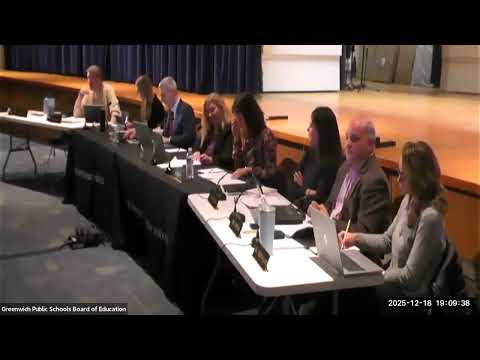
Greenwich Board of Education approves 2026–27 operating budget 7–1 after weeks of community protest
Summary
After nearly two hours of public comment from students, parents and teachers opposing proposed staff reductions, the Greenwich Board of Education approved the 2026–27 operating budget 7–1; a bid to add roughly $432,000 to the budget failed earlier in the meeting.
The Greenwich Board of Education approved the 2026–27 operating budget on Dec. 18, voting 7–1 after an hour of public comment focused on proposed teacher and administrator cuts.
Students, parents and union leaders urged the board to delay or revise the budget, arguing that cuts would reduce electives, increase class sizes and remove services that cannot easily be restored. Gabriel Lehi, student body president at Greenwich High School, asked the board to postpone a vote, saying: “Ask what cannot be replaced once it’s gone.” Margaret Jackins, president of the Greenwich Education Association, described the concentration of cuts in world languages as “appalling” and warned that losing experienced teachers would harm student opportunities. Monica Huang, GHS PTA co-president, told the board she and many PTA leaders “oppose the proposal to cut 6 and a half teaching positions and 1 administrative position at GHS.”
Board members debated an amendment to increase the budget—proposed as a $216,000 addition and later discussed as $432,000—intended to give the superintendent additional flexibility. The amendment failed on a 3–5 vote. Superintendent Dr. Jones said the district builds staffing around projected course enrollments and monitors FTE (full‑time equivalent) needs through the summer; “I’m comfortable with the budget or I wouldn’t have presented it,” she said.
Supporters of the adopted budget stressed fiscal constraints, enrollment declines and contractual obligations. The superintendent noted district enrollment fell from 9,113 in 2018 to a projection of about 8,270 for next year, and she highlighted increased transportation and special-education costs as drivers of budgetary pressure. Several board members said they would continue to monitor enrollment and staffing and pursue scheduling fixes where possible.
The board also approved related operating sub-items: the food-service budget passed separately (8–0). Following the vote, the board signaled it would track the issues raised during public comment and consider follow‑up reports on scheduling and enrollment when the board reconvenes.
What’s next: The superintendent said the district will report on open-enrollment survey results and enrollment clarifications at the Jan. 15 meeting; any in-year staffing adjustments would follow standard procedures and, where required, involve the Board of Estimate and Taxation.