Get Full Government Meeting Transcripts, Videos, & Alerts Forever!
Get email alerts on the Parking Traffic topic
No spam. Unsubscribe anytime.
Council denies parking restrictions on West Bank Street after neighbors oppose change
Summary
The council voted unanimously to deny an ordinance that would have created a no-parking zone on West Bank Street, citing advisory board opposition and neighborhood impacts; a committee member urged stepped-up enforcement rather than new restrictions.
The Fond du Lac City Council on Dec. 10 voted to deny an ordinance that would have created a no-parking zone along the south side of West Bank Street between North Macy Street and North Main Street.
City Engineer Mr. Johnson told the council the advisory Parking and Traffic Board recommended denying the change after hearing from five to six property owners on that block who opposed restrictions. The requester in the record (identified in meeting text as "Mister Lalambard"; name appears variably in the transcript) said emergency vehicles could not traverse the street when cars park on both sides.
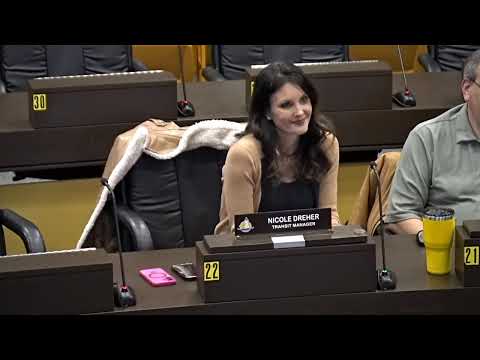
An advisory committee member who attended the board discussion urged patience and stepped-up enforcement as an alternative to a permanent restriction. "I sympathize with Mister Lombard, but if people start getting tickets ... I really believe that his situation should improve," the committee member said, arguing the street width generally allows parking on both sides while maintaining two-way traffic.
Council offered a motion to deny the ordinance (motion by Ms. Leering, second by Mr. Mullen); the motion to deny passed unanimously.
The record shows engineers and the advisory board favored denial because most nearby residents opposed adding parking restrictions; council members cited resident hardship concerns and preferred enforcement measures before imposing a permanent ban.