Get Full Government Meeting Transcripts, Videos, & Alerts Forever!
Get email alerts on the Zoning Code Rewrite topic
No spam. Unsubscribe anytime.
Commission reviews second wave of zoning-code rewrite chapters, debates density and mixed-use options
Summary
Commissioners reviewed draft articles 8, 9, 16, 26 and 27 and appendices A and B as part of wave 2 of a zoning-code rewrite, discussed a 125% density cap for alternative development options, and considered whether limited small-scale commercial uses should be allowed in mixed residential plan developments.
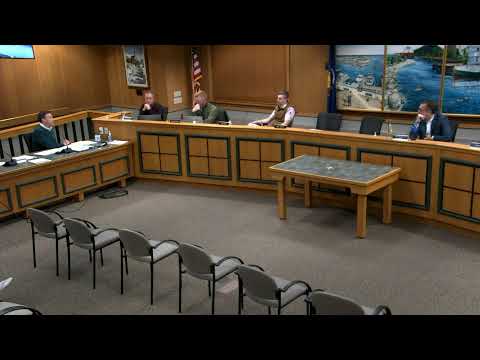
On Nov. 20 the Port Washington Plan Commission reviewed wave 2 of a proposed zoning-code rewrite, taking feedback on draft Articles 8 (alternative development options), 9 (codification of planned developments), 16 (land uses), 26 and 27 (nonconformities), and appendices A (land use table) and B (land use descriptions and standards).
Craig Huebner of Grama, the consultants working on the rewrite, said Article 8 is intended to create clearer standards for alternative development types (for example, cottage courts, conservation subdivisions and mixed-residential plan developments) and provide an option set so the commission and staff do not evaluate every proposed development on an ad hoc basis. "Think of your OPD right now, your overlay districts that allow for more flexible types of development if they don't meet the base zoning," Huebner said, describing the article's intent to replace legacy overlay approaches with new planned-unit frameworks.
Commissioners discussed several policy choices embedded in the draft. Staff highlighted a working cap allowing up to 125% of the underlying zoning district's density for certain alternative development options; several commissioners expressed support for retaining a stated cap to maintain predictability, while acknowledging some cases might merit greater flexibility through a legislative decision. Commissioners also raised the possibility of allowing limited, small-scale commercial uses (for example, a bakery or corner business) inside mixed residential plan developments, with several members preferring such uses be located along arterials or site entries rather than inside neighborhood cores.
Consultants explained Article 9's purpose to codify previously approved planned developments in the zoning code and to place referenced development documents on the zoning map for easier public access. Article 16 largely carries forward existing land-use definitions and clarifies which processes require design review, zoning permits or site-plan review. Commissioners asked about maintenance of the code and the crosswalk between local code and state statutory updates; consultants said staff and legal counsel will vet the final text prior to adoption.
On Articles 26 and 27, staff and consultants described updates to nonconforming-use rules and referenced state statute crosswalks. A commissioner asked how often floodplain maps are updated and whether local creek mitigation could trigger a new flood-study submission to FEMA; staff said states and FEMA typically update maps on multi-decade cycles unless a local engineering study is submitted and accepted, in which case the maps can be revised sooner.
Appendix A (the land use table) and Appendix B (land-use descriptions and standards) were presented as the "meat and potatoes" of the rewrite that will require additional review and outreach; staff asked commissioners to focus initial feedback on allowable uses in each district and to raise specific use concerns ahead of the next wave.
The session was discussion-only; no formal code changes or votes were taken. Consultants said additional draft chapters (wave 3) will appear in coming meetings and that a more detailed approval process will follow once public outreach and internal vetting are complete.