Get Full Government Meeting Transcripts, Videos, & Alerts Forever!
Get email alerts on the Audits topic
No spam. Unsubscribe anytime.
Baltimore Biennial Audits Oversight Commission adopts 2026 Group B audit plan
Summary
Auditor Josh Pash presented proposed 2026 Group B audits covering the Health Department, Planning, Transportation, Police, Rec & Parks and other agencies; the commission voted to adopt the plan and asked the auditor to refine scopes on collections, permitting and street-cut repairs.
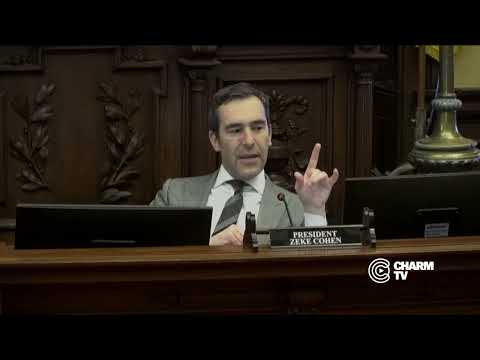
Council President Cohen called the Biennial Audits Oversight Commission to order and opened the meeting by praising the city auditor’s recent work, saying, “Auditor Pash and his team have done outstanding work this year.”
Auditor Josh Pash then presented the commission’s proposed 2026 Group B audit plan. “My name is Josh Pash, and I am here to present the 2026 proposed audit plan for Group B audits,” he said, and listed proposed objectives that include reviews of Baltimore City Health Department physician contracts, the Recreation & Parks 4-Cs tree removal program, the Police Department’s administration of canceled H days (including penalty pay rules), Department of Human Resources classification and compensation processes, Department of Law collections for non-lienable bills, Department of Planning permit- and site-plan review processes, Department of Transportation oversight of street cuts and restorations, MOED monitoring of youth work attendance and pay, and follow-up work on the Safe Streets program.
Commissioners pressed for detail on several audit scopes. On collections, Mr. Pash said the audit team will refine scope during preplanning and focus on bills that enter a collections process rather than lienable debts such as water bills; he said he would report back with examples and a narrower scope. On site plan review, Pash described the planned review as focused on the site plan review committee’s efficiency as a convener — tracking handoffs, timing and monitoring — rather than auditing each participating agency’s technical permitting decisions. Pash also noted prior findings about Planning’s permit-tracking system, including unreliable dates and lack of secondary review.
Council member Ryan Dorsey pushed on DOT and street-cut oversight, citing long-standing patches and inconsistent reporting: “we still have asphalt patches... that are 2 and 3 and 4 and 5 and 8 years later,” and asked the auditor to examine whether DOT or outside contractors are reporting and completing required repairs. Inspector General Isabella Mercedes Cummings offered to share her office’s earlier investigation into street cuts to inform the audit team.
The commission moved to adopt the proposed audit program. Council President Cohen moved adoption; the motion was seconded and commissioners present voted to approve the plan. The commission’s recorded yes votes at the adoption were Council member Danielle McCrae; Inspector General Isabella Mercedes Cummings; Council member Ryan Dorsey; Council President Cohen; Deputy Comptroller Erica McClanney (representing the Comptroller); and Mister Moxon. The president closed the meeting and thanked attendees.
The auditor said staff will refine several scopes and return with more specific preplanning details, including concrete examples for the collections review and follow-up timing for Planning and Safe Streets audits. The commission also approved the minutes from a prior September 2025 meeting during the session; materials referenced both Sept. 10, 2025 and Sept. 25, 2025 in different places and the auditor and staff indicated they would clarify the record where needed.