Get Full Government Meeting Transcripts, Videos, & Alerts Forever!
Get email alerts on the Parking Benefits Districts topic
No spam. Unsubscribe anytime.
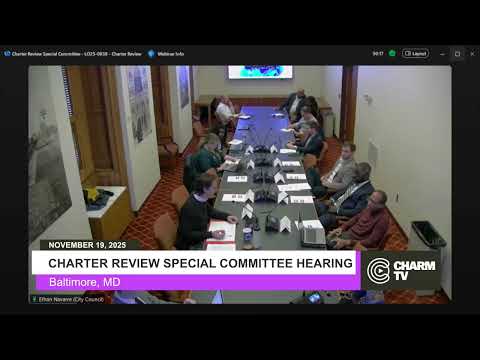
Committee examines 'parking benefits' districts and whether special funds must be chartered
Summary
Committee members discussed creating parking benefits districts that would return metered revenue to local main streets and explored whether creating or funding non‑lapsing special funds requires charter language or can be done by ordinance.
Committee members explored a proposal to allow parking meter revenue collected on defined main‑street corridors to be redirected back to those corridors — a ‘parking benefits district’— and discussed whether such revenue‑directing mechanisms require charter provisions or could be achieved by ordinance.
Members and counsel separated two questions: the existence of a special or non‑lapsing fund, and the authority to appropriate or direct funding into that fund. Several examples were discussed, including the city's Affordable Housing Trust Fund and the 'percent for art' public‑art arrangement, to illustrate how some funding mandates became charter provisions to bind future legislatures.
Counsel and staff noted legal complexities: ordinances can create funds and dedicate revenue, but mandating a specific percentage of the budget or binding future legislatures to a fixed appropriation can raise state‑law or constitutional issues. The committee asked counsel to research what specific charter language currently constrains the council’s ability to create or fund non‑lapsing funds by ordinance and to summarize relevant case law (counsel referenced a Maryland Supreme Court decision concerning the 'baby bonus' as background on voters’ role and appropriation limits).
No policy was adopted; the committee directed staff to return with a memo explaining the charter constraints and examples of workable ordinance approaches.