
Buncombe JRAC narrows two-year strategic plan, assigns work groups for behavioral health, courts and community engagement
Get AI-powered insights, summaries, and transcripts
Subscribe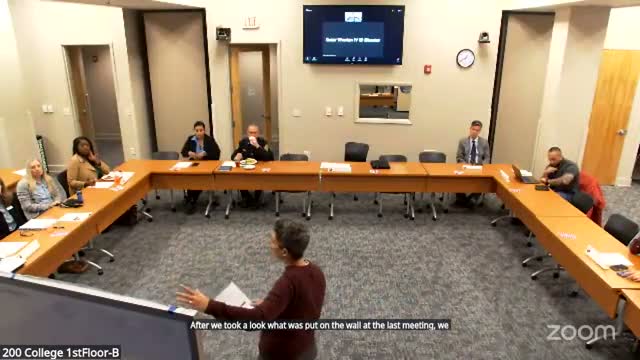
Summary
The Justice Resource Advisory Council agreed on four priority work areas — behavioral health, community engagement, courts and law-enforcement response — and identified existing work groups (CIT steering, CCR, JCPC, case review) to lead tasks and measures to track progress over the next two years.
The Buncombe County Justice Resource Advisory Council on Dec. 5 refined a two-year strategic plan and assigned responsibilities for implementing four priority areas: behavioral health, community engagement, juvenile justice/costs and arrest-and-court disparities.
Facilitator Lee Creighton asked members to confirm the "buckets" the council had developed and to identify which existing work groups should take the lead. "What we're asking JRAC to do is provide guidance to its committees, to the membership and departments and offices that are part of JRAC," Creighton said while reviewing proposed goals to reduce disparities, expand co-responder capacity and develop law-enforcement-assisted diversion options.
Members tentatively placed behavioral-health tasks with the Behavioral Health and Justice Collaborative and the Crisis Intervention Team (CIT) steering committee, and domestic-violence review with the Coordinated Community Response (CCR) work group. The Juvenile Crime Prevention Council (JCPC) was identified as a likely lead for juvenile detention cost reviews.
On measures, Creighton proposed collecting agency-level counts of law-enforcement drop-offs at behavioral-health urgent care centers and measuring inpatient "bed-days" occupied as indicators of capacity. Members said the county can reliably pull data for Medicaid-contracted beds but that coverage of noncontracted beds will require additional data requests to state or vendor reporting entities.
Several members highlighted implications from recent changes in pretrial law. One participant summarized the effect as: if a person has three qualifying misdemeanor convictions within 10 years, they "are not eligible for an unsecured bond" and may face secured bonds and longer jail stays. Members agreed to expand the jail-review team's responsibilities to include automated reporting and more regular case reviews with the district attorney's office.
The council agreed to collect more information and return with draft measures in February, with a target of presenting a finished plan for a vote at the next JRAC meeting.
The meeting closed with members endorsing a proposal to reframe JRAC's structure (to be presented to the county commission as a resolution) and a motion to adjourn.