Get Full Government Meeting Transcripts, Videos, & Alerts Forever!
Get email alerts on the Lgbtq Health Services topic
No spam. Unsubscribe anytime.
City council committee reviews HIV, syphilis and MPox data and pushes for broader LGBTQ services
Summary
At a Baltimore City Council Public Health and Environment Committee hearing, health and mayoral office officials reported 2024 HIV, syphilis and MPox numbers and outlined initiatives on training, gender-neutral restrooms and community engagement; council members requested mandatory training, a council liaison and follow-ups on housing and municipal ID implementation.
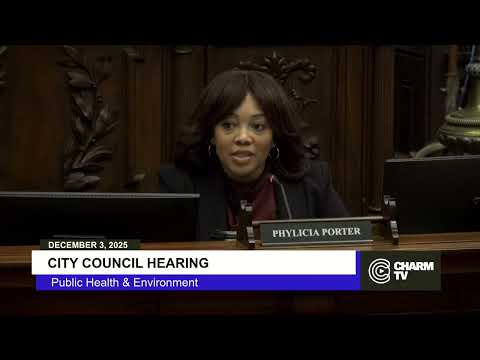
Baltimore City Council’s Public Health and Environment Committee on Monday heard updates from the Baltimore City Health Department and the mayor’s Office of LGBTQ Affairs on the state of HIV, syphilis and MPox in the city and pressed agencies for stronger, coordinated services for LGBTQ residents.
Councilwoman Felicia Porter, chair of the committee, opened the hearing in recognition of World AIDS Day and said the council must move beyond symbolic gestures. "LGBTQ residents deserve a city where they feel safe in their bodies, affirmed in their identities, protected in their homes, and respected in their workplaces," Porter said.
The Baltimore City Health Department reported finalized 2024 surveillance figures and related outreach efforts. "In 2024, there were 179 people newly diagnosed with HIV," the health department representative reported, and said men who report male sex made up 57 percent of new diagnoses, down from 62 percent in 2023. On syphilis, the department said cases fell from about 1,200 in 2023 to 1,110 in 2024, and staff described provider advisories, expanded testing on a mobile outreach van, partner-notification work and provider training to address the trend.
Public-health officials also detailed a recent rise in MPox cases: "In Baltimore City, we saw a total of 24 cases reported from January 1 to November 20," the department said, noting more than half occurred after Sept. 1 and that vaccination is available at city clinics.
Dr. Melanie Bryant, director of the mayor’s Office of LGBTQ Affairs, outlined administrative priorities and community engagement strategies. She said the office has trained more than 1,100 city employees through a Workday module and has completed nine gender-neutral restroom conversions across city facilities. "We're looking to expand those trainings as city agencies ask us to be a part," Bryant said, and described a pilot to map culturally competent services online (Charm Care), monthly community conversations and interagency liaison meetings.
Committee members pressed officials on practical solutions. Councilman James Torrance asked whether hospital partners could identify clinicians who self-report as competent in gender-affirming care so residents can find appropriate providers. Bryant said Charm Care aims to centralize resources and make it easier for residents to find primary, mental-health and gender-affirming services.
The committee also raised workforce and policy actions. Porter said the committee is issuing an "official committee request for mandatory training" so that cultural-competency training is more broadly required across city departments. Council members asked for a council liaison to attend LGBTQ Commission meetings and for clearer timelines: Bryant said the office will produce a yearly report and "we will try to" present one to the council by Dec. 31.
Tika Torres, chair of the city’s LGBTQ Commission, described real-world housing and care challenges, including where to house transgender people and the need for local guidance on gender-affirming care at hospitals. "Nobody should be able to opt out of caring for us," Torres said, urging the city to set clearer standards and accountability.
During two rounds of public testimony, community leaders urged increased funding and services. Keith Holt of Begin Anew cited local rates and asked the city to expand funding lines, housing resources and culturally competent mental-health services. "In Baltimore, 1 of every 24 black men is living with HIV," Holt said, and asked the council to invest in community organizations working directly with affected populations. London Smith outlined plans to establish an LGBTQ-affirming charter school that would include housing support for youth.
The committee concluded with additional follow-ups: members asked the mayor’s Office of Homeless Services for a plan to address federally announced cuts that could affect roughly 700 permanent supportive-housing units and requested an update on municipal ID implementation. Officials agreed to follow up with the committee.
The hearing produced no formal votes; it ended with Porter emphasizing ongoing collaboration among council members, the health department and community partners to translate discussion into action.