Residents urge Gurnee to adopt 'ICE-free' and welcoming‑city measures at village meeting
Loading...
Summary
Multiple residents used public comment to press the Village Board to designate Gurnee a welcoming city and to pass local ordinances restricting federal immigration‑enforcement activity on village property, citing recent ICE activity in the area and concerns for schoolchildren and immigrant residents.
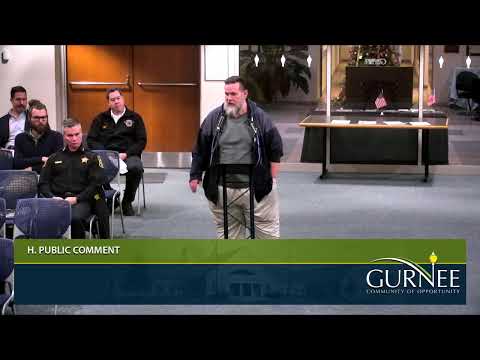
Several residents addressed the Village Board during the general public‑comment portion of the Dec. 15 meeting, urging action to limit immigration‑enforcement activity on village property and to adopt welcoming‑city policies.
Julian Ruiz, who identified himself as an organizer with the Party for Socialism and Liberation and a lifelong local resident, said "ICE and CBP agents have kidnapped over 3,000 of our friends, family, and neighbors all over Chicagoland," and asked the board to pass an "ICE‑free zones" resolution to restrict federal agents from using village property. Ruiz said residents were organizing protests and called for local policy action.
Katie Salyer, a parent and Woodland Schools supporter, urged the board to take three steps: establish a welcoming‑city designation, adopt a local prohibition on face coverings by federal agents operating on village property to ensure identifiability, and designate village property — including schools and parks — as ICE‑free zones. "This is not about partisan politics. It is about local governance, constitutional accountability and the responsibility of municipal leaders to protect the people who live, work and attend school here," Salyer said.
Other speakers — including long‑time residents and school staff — echoed those concerns. Michelle Nachman, who said she has worked at Woodland Elementary for 24 years, described fears for students and said she was "disappointed" with the mayor's earlier statement that such resolutions may be unenforceable. Claire Plowgian, a bilingual speech‑language pathologist, noted the district's Hispanic/Latino student population and said increased ICE presence had reduced use of local services by immigrant families.
Speakers urged the board to follow examples from neighboring jurisdictions that have issued executive orders or resolutions limiting local entanglement with civil immigration enforcement. The board did not vote on any immigration-related ordinances at this meeting; public comment closed and the meeting adjourned.