
Residents press Long Branch council on taxes, school board accountability and housing affordability
Get AI-powered insights, summaries, and transcripts
Subscribe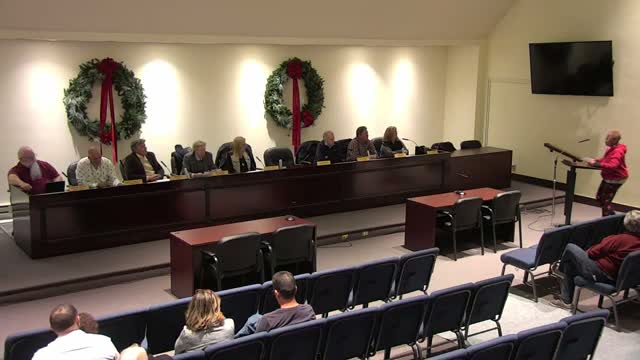
Summary
Multiple residents at the Dec. 23 meeting urged the council to address rising property taxes, Board of Education authority, housing affordability and immigrant protections; council members agreed to workshop the issues.
At the public participation portion of the Dec. 23 Long Branch City Council meeting, several residents urged the council to take steps on taxes, school board accountability, housing affordability and protections for immigrants.
Marsha Brown (111 Joline Avenue) described a local case of a longtime worker detained in a federal facility after a parking ticket and asked whether the city has sanctuary policies: "there's a child who's crying for his father," she said, and urged the city to require judicial warrants before sharing resident information and to support nonprofits that assist immigrants. Council members acknowledged the concern and said they would try to address questions after the public comment portion.
Nick Deagle (580 Patton Avenue) criticized the influence of the separately elected Board of Education and called it "untouchable," urging creation of a liaison or committee to improve accountability and offering to volunteer. He told the council, "Give me something concrete," and sought a workshop discussion. Council members said the municipal portion of taxes is about 38% of a resident's bill while county, board of education and library comprise the remainder; they agreed to place the issue on a workshop agenda to explore options and outreach to the board of education.
Other residents, including Patty Perillo (70 North Bath Avenue) and a speaker identified as JPR, described steep tax increases (one said taxes rose by $1,300 this year) and worry about displacement as new development raises property values. The mayor and council described actions taken by the administration — e.g., removal of a 30-year abatement for Lower Broadway and an affordable-unit requirement for large developments — and noted that changes in property assessments also affect tax bills.
Why it matters: Residents tied individual hardships to municipal policy choices and to decisions by the Board of Education, raising calls for transparency, liaison efforts and targeted tax assistance. Council members agreed to continue the conversation in a workshop session.
What the record shows: Multiple speakers urged action; council agreed to place the topic on a future workshop agenda and to continue outreach. No formal policy changes were enacted during the Dec. 23 meeting.