Get Full Government Meeting Transcripts, Videos, & Alerts Forever!
Get email alerts on the Pud Development topic
No spam. Unsubscribe anytime.
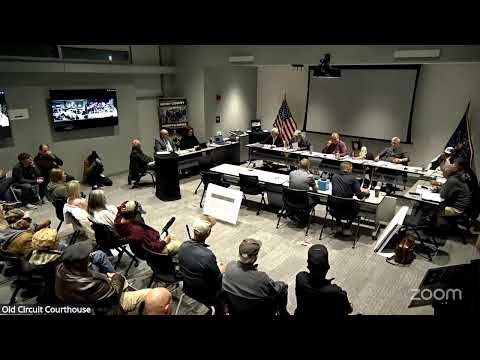
Planning commission forwards favorable recommendation for Henry County Technology Park PUD after discussion of water, power and protections
Summary
After extensive review and community questions, the Henry County Planning Commission certified a favorable recommendation for the Henry County Technology Park PUD (Case 2285), subject to commitments on water use, infrastructure funding, road repairs, noise and other conditions; the recommendation will go to the county commissioners.
The Henry County Planning Commission voted to certify a favorable recommendation to the county commissioners for Case 2285, the Henry County Technology Park planned unit development (PUD), after lengthy presentations from project representatives and extended questioning by commissioners about water, power, roads, noise and environmental protections.
Project representatives (identified in the transcript as Speakers 5 and 10) described a development model that would attract data‑center, manufacturing and related industrial users to a roughly 500‑acre site near State Road 109 and I‑70. They said they are proposing additional restrictions above current zoning and would prohibit on‑site wells to block single‑use open‑loop cooling systems; presenters also indicated they would accept a strengthened prohibition to ban single‑use open‑loop cooling outright if the commission requested it.
On infrastructure and costs, project reps said they have discussed possible connections with the towns of Knightstown and Shirley and estimated an upfront commitment in the neighborhood of $20 million–$30 million to extend water and sewer service and to upgrade local treatment facilities. The presenters said the project would pay for electrical generation and transmission on site and would not rely on Henry County taxpayers or local ratepayers to fund the installations. "We promise that this project ... all electrical infrastructure will be 100% funded by the project itself," a project representative said (Speaker 5).
Commissioners pressed for specifics. Questions addressed: whether Knightstown’s wells could supply the site (presenters said Knightstown has two wells west of town and acknowledged upgrades would be required), how roads damaged by construction would be repaired (project reps said the project would be responsible for repairs and would enter agreements with the county), and whether the project would use union labor (project reps said yes). Commissioners also raised the risk of future owners abandoning infrastructure; presenters said they were open to deed covenants to lock in water/cooling restrictions but asked to time such covenants to avoid inadvertently harming future farmers if the PUD does not attract a user within the zoning window.
Environmental and regulatory matters were discussed: project reps said air emissions would be permitted through IDEM and the EPA using best‑available control technologies and selective catalytic reduction, and interconnection of on‑site generation to the grid would require regulatory review through the Indiana Regulatory Commission and MISO. The presenters compared potential emissions to an existing local reference and emphasized technological improvements and permitting requirements.
Taxation and revenues were also clarified. A commissioner asked whether such developments would be exempt from county taxes; project reps stated that property taxes and local revenues would apply and that any local tax exemptions would require formal action by the county council. Presenters said they will focus on ensuring direct revenues to Henry County and Knightstown schools from day one.
After discussion, the planning commission voted to forward a favorable recommendation to the county commissioners, with the recommendation that the project incorporate the commitments described at the meeting (water‑use restrictions, infrastructure funding, road repairs, and the other protections presented). The county commissioners will review the planning commission’s recommendation at a future meeting.