
Students and community clash over new Club America chapter at Western Placer Unified meeting
Get AI-powered insights, summaries, and transcripts
Subscribe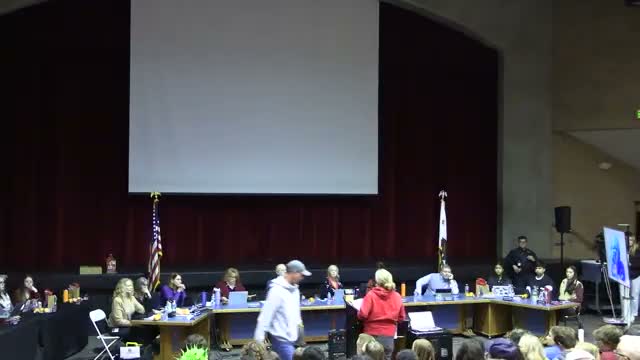
Summary
Dozens of students, parents and community members told the Western Placer Unified School District board Dec. 16 that a newly formed Club America/Turning Point USA chapter either threatens student safety or represents protected student speech. Speakers on both sides urged the board to protect students from harassment while upholding club‑approval law.
At a Dec. 16 meeting of the Western Placer Unified School District Board of Trustees, roughly an hour of public comment focused on a new student group identified in the record as Club America/Turning Point USA, with speakers sharply divided over whether the club’s meetings amounted to legitimate free speech or to conduct that harms marginalized students.
Several student speakers and parents defended the new club as a forum for debate and urged protection of student club rights. Derek Holt, introduced as "president of Club America at Fulbrisk High School," said the club "is simply students trying to foster conversations between people with different opinions" and that meetings are monitored by school administrators. Former student board representative Gavin Whalen told trustees students “deserve the right to debate and express their diverse opinions” while urging respectful dialogue.
Other speakers said the club’s programming crossed a line. A tenth‑grade student who identified themself as Elliot Armstrong quoted remarks attributed to former guest speaker Holly Andretta and said that, according to the transcript, Andretta stated, "My oldest daughter has a lot of trauma as a child, and as a result of it, she's a lesbian." That quotation and other excerpts from recorded meetings drew repeated criticism from parents and students who described the club’s early programming as "divisive" and said it had prompted online harassment and threats. One commenter asked the board to "suspend the Club America chapter at [a district high school]," saying students felt unsafe.
Speakers on both sides urged the board to protect students from harassment and to apply district and state law consistently. Several public commenters cited the federal Equal Access Act and the California Education Code (referenced in the meeting) to argue that student clubs, once properly approved, are entitled to equal access unless their activities are obscene, defamatory or substantially disruptive. Others called on the district to provide more facilitation for politically affiliated clubs and to investigate alleged doxxing and online targeting of students.
Board members acknowledged the intensity of the comments and emphasized a distinction between adult‑led intervention and student activity. A trustee said they would attend a Turning Point meeting with a student to observe and to continue the district’s effort to model civil dialogue. Trustees repeatedly emphasized that district policy and federal law guide whether a club may meet on campus; one board member said, "This is not a matter for the board to act upon based on personal belief or preference," referencing the district’s legal obligations.
The public comment period closed after multiple speakers on both sides made testimony. No motion to suspend or remove any student club was recorded during the meeting; trustees instead discussed follow-up steps, including staff review and direct engagement with student leaders. The board asked staff to consider facilitation supports for clubs with outside speakers and to investigate allegations of harassment that have accompanied the dispute.
The board moved on to routine business after closing public comment. The next procedural step for any formal action regarding club recognition would be an agenda item placed on a future board meeting.