Get Full Government Meeting Transcripts, Videos, & Alerts Forever!
Get email alerts on the Land Use topic
No spam. Unsubscribe anytime.
City planner outlines comprehensive zoning-code overhaul, council raises questions about corridor zoning and daycares
Summary
City Planner Schoenig presented a 224-page draft zoning code proposing a full rezoning of Elyria (consolidating districts from 17 to 9, reduced residential setbacks in places, updated sign rules and removed overlays); council members pressed for more detail on corridor districts, drive-through grandfathering, tax impacts and daycare rules.
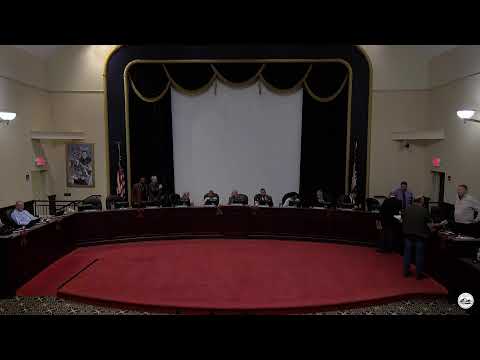
City Planner Schoenig presented a comprehensive rewrite of Elyria’s zoning code during a strategic planning session, calling the proposal “a complete rezoning of the entire city, every single parcel.” The draft — now about 224 pages — would reduce the number of zoning districts from 17 to 9, simplify and modernize terminology, revise setback requirements (in some residential areas reducing 30-foot setbacks to about 20 feet to allow greater density), and update sign, fence and parking rules to align with the city’s 2024 comprehensive plan.
Schoenig said the overhaul aims to make the code easier to understand by adding visuals and streamlining redundant districts. He noted the update was prepared with input from the law, engineering, safety-service and building departments and is intended as a living document that can be refined after implementation.
Council members raised detailed questions. Councilman Schneider and others voiced concerns about corridor-type zoning that could abut residences, seeking clearer buffering and restrictions; Schoenig said some blocks previously zoned for corridor had been returned to residential and that the draft includes restrictions such as limiting drive-through operating hours where they abut residential areas. Law Director Deary and Safety Service Director Pironowski addressed potential tax-classification questions and said the county auditor’s classification and periodic reassessments would determine any tax effects, not the city alone. Planners explained that type B home daycares (about one to six children) are permitted by right in residential districts and that type A daycares remain conditional uses with safety-oriented requirements such as fenced yards.
Council members asked staff to provide additional written detail on corridor boundaries, grandfathering rules for existing uses, potential tax implications, and the design-review guideline updates referenced during the presentation. Schoenig and staff said they would provide more detail and recommended the incoming council review the materials at a future strategic planning meeting and at scheduled public hearings.