
Mid Kings River GSA reviews draft sustainable management criteria and tradeoffs for subsidence, quality and storage
Get AI-powered insights, summaries, and transcripts
Sign Up Free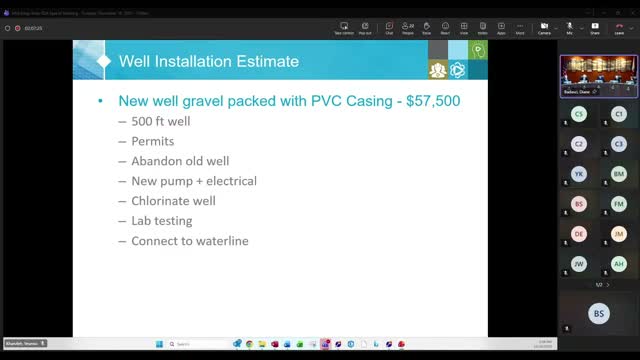
Summary
Consultants presented draft sustainable management criteria (SMCs) including thresholds for undesirable results, an estimate of cumulative groundwater storage reduction (~3.5 million acre‑feet to 2040 under the draft method), and tradeoffs between allowable water‑level declines and mitigation costs.
Consultants walked the Mid Kings River GSA board through draft sustainable management criteria (SMCs) on Dec. 16, highlighting how proposed minimum thresholds and undesirable results would be measured and mitigated.
Key elements included water‑level thresholds by zone, an approach for handling fallowed land in ET‑based accounting, monitoring of roughly 50 wells, and the inclusion of small community wells in water‑quality metrics. Hussain said the team estimated a cumulative groundwater storage reduction of roughly 3.5 million acre‑feet between 2015 and 2040 using a methodology similar to neighboring basins.
Hussain explained the tradeoffs: a more permissive threshold for allowable water‑level decline could increase the number of wells that go dry and therefore the mitigation budget the GSA must set aside. As an example, staff used a planning figure of 10 wells mitigated at roughly $100,000 per well (a planning simplification) to illustrate the potential cost tradeoff between stricter thresholds and mitigation spending.
Board members asked for more detailed modeling and emphasized coordination with neighboring GSAs on SMCs and subsidence management. Several members also urged greater clarity from the state before finalizing metrics; staff said they will continue refining SMC values with stakeholder input and return with recommended thresholds.