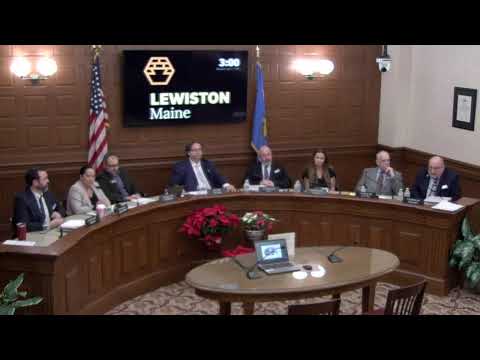
Lewiston council rejects Mill Compute AI data‑center agreement amid strong public opposition
Loading...
Summary
The City Council voted 0‑7 to reject a joint development agreement with Mill Compute LLC to convert Bates Mill 3 into a Tier‑3 AI data center after residents and several councilors raised concerns about water use, air and noise impacts, limited local jobs and an insufficient public process.
Lewiston — The City Council voted unanimously to reject a proposed joint development agreement (JDA) with Mill Compute LLC to convert Bates Mill 3 into a Tier‑3 artificial intelligence data and technology center, following hours of public comment and sharp concerns from councilors about environmental and community impacts.
Supporters of the motion to adopt the agreement said the project could bring investment; opponents outnumbered them at the microphone. The clerk recorded the final tally as 0 in favor, 7 opposed. Several councilors said they had not received adequate answers on key technical and community issues and that public outreach had been insufficient.
Why it mattered: Residents and technical witnesses argued the downtown mill location and potential utility upgrades do not fit the riverfront master plan and could stress local resources. Kyle Mateviere, a local cybersecurity professional who worked in large data centers, told the council the facility would be “roughly 85,000 square feet” and contended projected power use implied “$120 to $250,000,000 a year” in operating cost and large long‑term tax considerations. Multiple speakers warned of high water consumption for cooling, local air pollution from a proposed CHP (combined heat and power) plant, and minimal lasting local employment.
Public opposition: A sequence of residents, students and technical commenters urged the council to reject the agreement. Sophomore Hunter Bouchard said classmates opposed the proposal because of “environmental concerns and the way this will impact the culture of Lewiston.” Steven Elwell, who said he has worked in computing for 30 years, argued the project could require a natural‑gas generation plant and release waste emissions into Lewiston’s air.
Council rationale: Several councilors said they were sympathetic to economic development but unconvinced the city would receive adequate, enforceable community benefits. Councillor statements recorded concern about the developer’s recent formation, the lack of named long‑term operators, and the absence of sufficient community hearings before a last‑minute council vote. Councillors also noted doubts about multi‑decade tax break terms and how a downtown server farm would align with downtown revitalization goals.
What happens next: With the JDA rejected, proponents would need to restart outreach, provide additional technical documentation and renegotiate terms before the council would consider another proposal. Several councilors said they would welcome alternative reuse plans for Mill 3 that emphasize housing, small business space or cultural uses.
Vote and procedural note: The motion to adopt the JDA failed on a roll call vote of 0‑7. The council moved immediately to the next agenda items after the vote.