Lakota-led forum brings school, township and business leaders together to explore shared services and regional governance
Summary
Lakota Local Schools convened township, county and business leaders to discuss shared services, possible formation of a regional council under Ohio Revised Code Chapter 167 and next steps for administrators to assess legal and operational feasibility; no formal policy or vote was adopted.
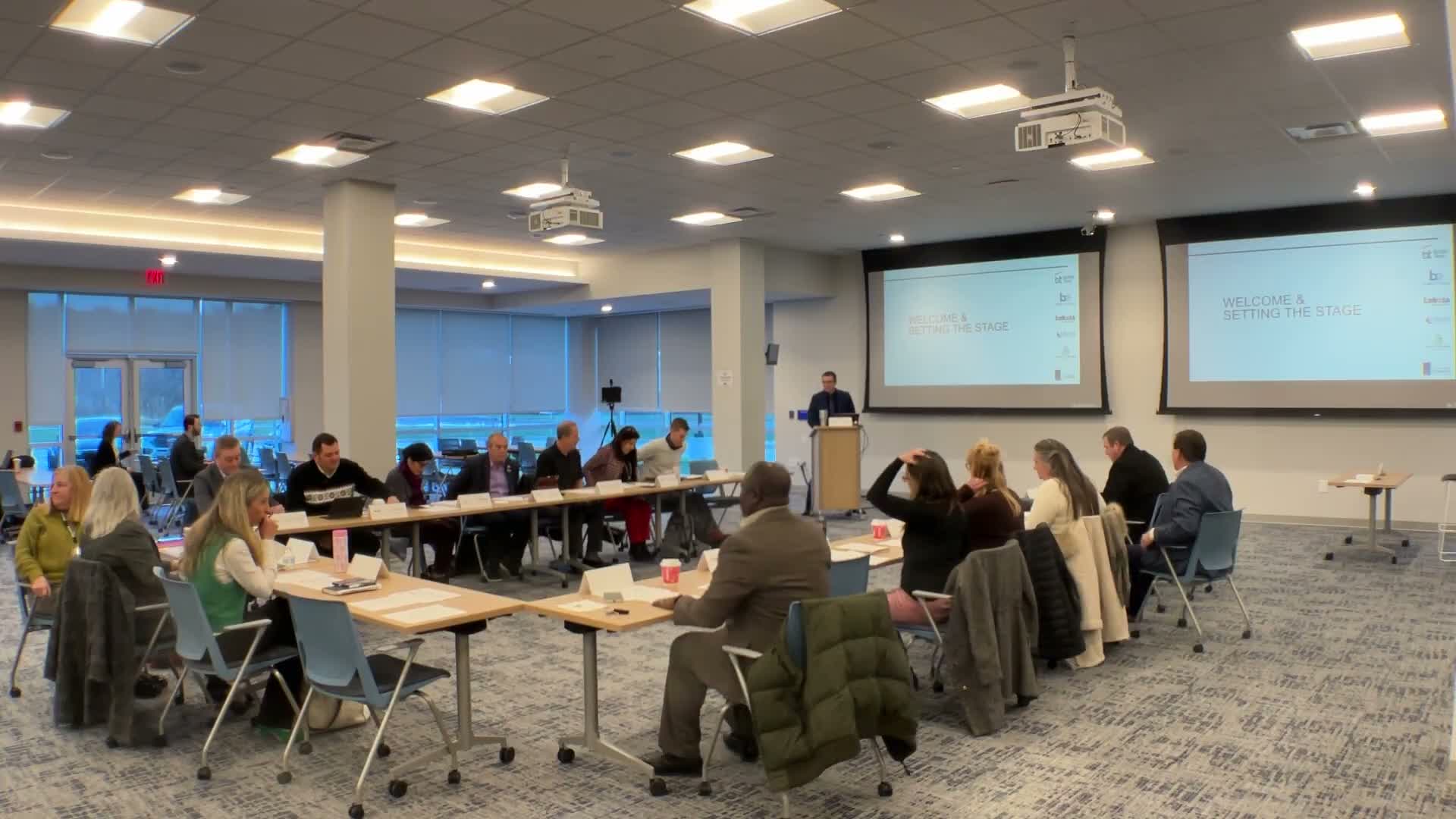
Lakota Local Schools hosted a community partnership collaboration forum where school, township, county and business leaders agreed to explore joint approaches to shared services, data-sharing and regional coordination but stopped short of forming a binding body.
At the forum the Lakota superintendent, identified in the transcript as Dr. Weidley, framed the meeting’s purpose as finding ways to ‘‘collaborate together to either enhance what that is or minimize what that calls for all of us to do better for this community as a whole.’’ Speakers from Westchester and Liberty townships, Butler County, Butler Tech and the Westchester Liberty Chamber urged starting with pragmatic shared services — maintenance, custodial work, transportation and facilities scheduling — and compiling data to estimate potential savings.
Speakers repeatedly pointed to state funding and property-tax changes as an immediate driver of the discussion. One participant said a change in state funding reduced the district’s state share from about 19% last year to roughly 11% this year, increasing pressure to find operational efficiencies. At one point a state-level figure was invoked — ‘‘this is a $24,000,000 or billion dollar, sorry, shift’’ — and participants characterized that number as uncertain and illustrative of the broader fiscal risk rather than a precise, agreed figure.
A central proposal discussed was creating a formal regional council of governments. A participant cited Ohio Revised Code Chapter 167 as a statutory route to create ‘‘a legal structure . . . recognized legally, transparent, accountable’’ for executing shared contracts and programs. Participants did not vote to form such a council; instead they agreed administrators should meet first to examine legal options, draft potential memoranda of understanding or bylaws, and produce cost-savings estimates.
Public commenters welcomed the outreach. One resident said the forum ‘‘sets a good example’’ and urged more resident involvement, while another, Steve Heizer of Liberty Township, pressed officials to explain levy and tax impacts to voters and referenced House Bill 355 in his remarks.
The forum produced two formal procedural actions recorded in the transcript: the agenda was approved by voice at the start of the meeting, and a motion to adjourn was made and seconded at the end. No ordinances, resolutions or intergovernmental agreements were adopted during the session. The assembled leaders recommended administrators convene in the coming months with the goal of reconvening the full group in the first quarter (participants suggested March or April) to review legal analyses and concrete proposals.
What happens next: administrators from the participating organizations will meet to evaluate statutory options (including whether to pursue an entity under Ohio Revised Code Chapter 167), estimate cost and operational impacts for candidate shared services, and bring recommendations back to the larger group for a follow-up meeting.