Lakota board debates multiple master‑facilities options, cites trust and timing as key hurdles
Summary
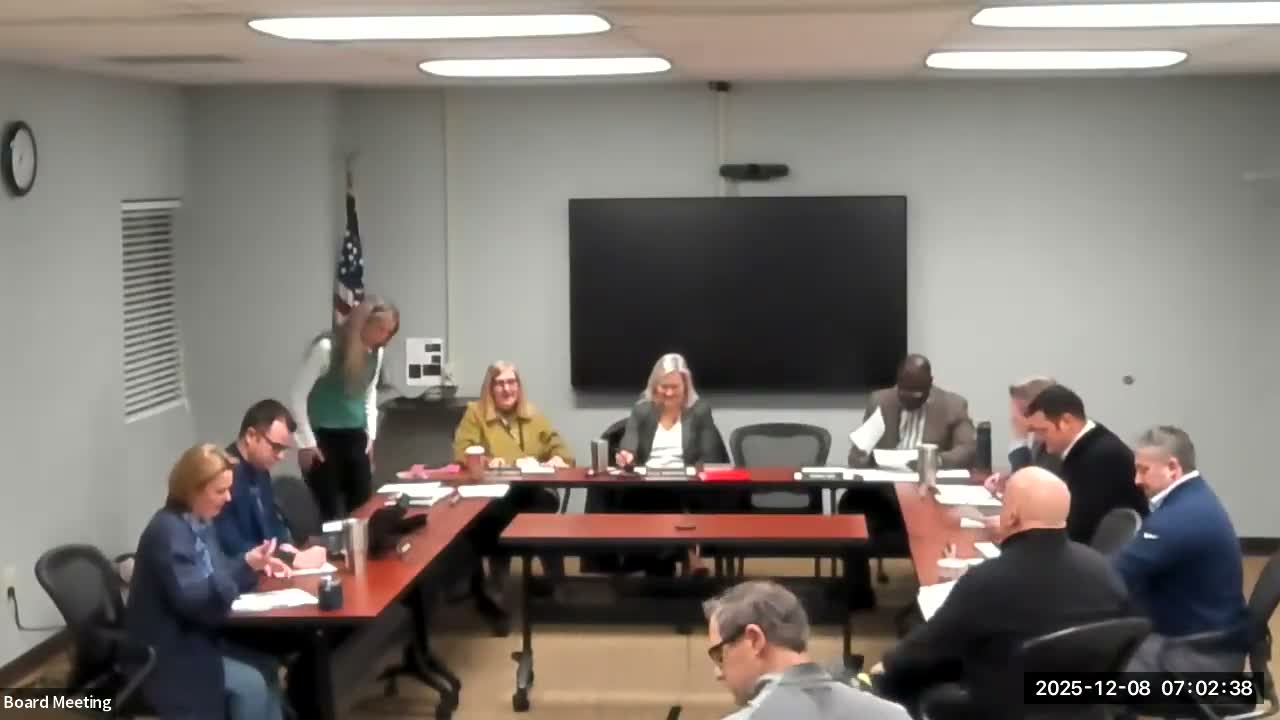
Trust in state funding, cost concerns, and class‑size relief dominated a December 8 Lakota Board of Education work session on several master‑facilities options. Trustees heard feedback from two focus groups and discussed phased, renovation, and hybrid plans with no vote taken on a preferred option.
The Lakota Board of Education spent a work session on December 8 reviewing alternative master‑facilities plans and community feedback, but did not adopt a course of action.
Board members and staff presented six broad options — ranging from re‑running the ballot measure as written to multi‑phase plans that prioritize high schools, middle grades or a mix of new builds and renovations. Speaker 4, who led the presentation, said the district has completed two focus groups so far and will expand outreach with a mailed survey and public sessions through January.
Why it matters: trustees repeatedly returned to the same practical questions — how to relieve current class‑size pressure, whether state assistance through the Ohio Facilities Construction Commission (OFCC) will be reliable, and what timeline the community will accept. "We heard that 586 was a lot," Speaker 4 said summarizing focus‑group feedback about the prior price point. Multiple trustees and participants said that skepticism about cost and about whether promised state funding would materialize remains a central obstacle.
Options discussed included: - Repeating the prior plan (Option 1), which Speaker 4 called "what we know" but warned could face the same community resistance that defeated it previously. - A two‑phase plan (Option 2) that would prioritize grades 7–12 first and push pre‑K–5 to a later phase; staff said each construction phase likely requires 18–24 months, so any phased approach delays full relief to some grade bands. - A three‑phase, high‑school‑first plan (Option 3) designed to show visible progress and possibly build momentum, at the cost of delayed elementary relief. - A renovation‑focused status‑quo option (Option 4) that preserves existing buildings but would yield limited operational savings. - Hybrid approaches (Options 5–6) that combine new builds with selective renovations and targeted redistricting.
Trust and messaging: several trustees and staff emphasized that the prior campaign's outreach and volunteer effort were insufficient. One participant suggested forming a community advisory team to test options and lead later presentations, noting community messengers (teachers were cited as high‑trust figures) may persuade voters more effectively than district staff alone.
State funding and technical questions: speakers raised the OFCC and state funding model as recurring concerns, with parents and some trustees asking whether the previously cited state match (discussed in prior materials during these sessions) could be reduced or altered. The board asked staff to prepare more explicit comparisons of cost and operational‑savings estimates for the options under consideration.
Class size and redistricting: trustees said class‑size relief can come partly from configuration changes (for example, moving sixth grade out of junior high) and partly from added building capacity; redistricting was discussed as a potential but politically sensitive lever.
Next steps: staff were asked to return with more refined, lower‑cost options and clearer, apples‑to‑apples cost and operational savings comparisons. Speaker 4 reminded the board that an early ballot target would require having materials finalized by early February if the district pursues a May election; otherwise November remains an option.
Votes at a glance: the meeting approved the agenda by motion and roll call early in the session; a motion to adjourn passed at the end of the meeting. There were no formal votes on any master‑facilities option during this session.
The board scheduled continued work and more public outreach; no final decision or bond question was set during the December 8 meeting.