Lakota board hears forecast showing state tax caps, TIFs could cut near‑term revenue
Summary
Treasurer presented a forecast showing House Bill 335’s inside‑millage deflator and other legislative changes could lower Lakota’s annual revenue; board also approved two negotiated TIF agreements that slightly improve the district’s share but delay some funding.
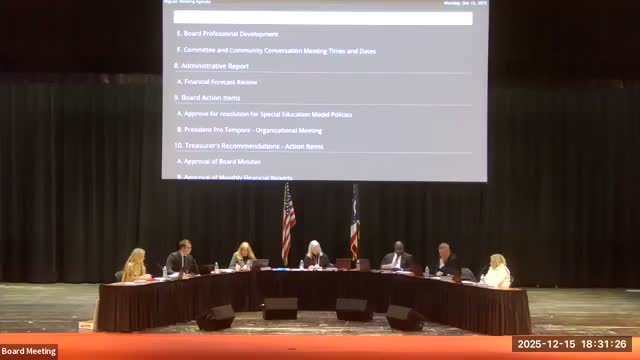
Lakota Board of Education treasurer Adam Zink told trustees Dec. 15 that recent changes in Ohio law are likely to reduce the district’s near‑term property‑tax revenue and complicate forecasting for operational levies.
"The deflator is working based on what we understand at this moment," Zink said, explaining the mechanism uses a three‑year average of property value. In a sample illustration presented to trustees, staff estimated a roughly $645,000 annual reduction to district revenue tied to one reappraisal scenario and the new deflator formula.
The presentation tied that change to House Bill 335 — described in the meeting as capping growth on inside millage — and referenced House Bill 186, which affects outside/voted millage for districts at Ohio’s 20‑mil floor. Zink cautioned that implementation details remain uncertain because of outstanding administrative rulemaking and reappraisal timing, and he said tax bills scheduled to go out in January will clarify effects.
Separately, staff recommended and the board approved two negotiated tax‑increment financing (TIF) agreements — for the Stony Brook development and for Vogel/Vogelsang Farm — that the treasurer said improve the district’s position compared with a straight 25% split. "I'd estimated that to be right around $1,000,000 increase from where we would have been with 25% for that first 10‑year period," Zink said, describing the revised terms for the first decade of the Stony Brook overlay.
Board members pushed for clear community communication about how TIFs defer, rather than eliminate, revenues. Trustee comments stressed that while some negotiated terms make Lakota ‘‘more whole’’ over the 30‑year term, the district still faces the operational challenge of serving new students during the deferred period.
The board voted by roll call to approve the TIF arrangements as presented. Trustees also discussed implications for levy timing and urged continued coordination with township officials and Butler County authorities.
What’s next: staff will incorporate the legislative scenarios into the district’s fiscal forecast, share updated tax‑bill impacts when available, and continue discussions with townships about future development and revenue timing.