Get Full Government Meeting Transcripts, Videos, & Alerts Forever!
Get email alerts on the Education School Separation topic
No spam. Unsubscribe anytime.
Malibu council unanimously authorizes agreements to advance Malibu Unified School District separation
Summary
The Malibu City Council unanimously authorized the interim city manager to execute three negotiated agreements with the Santa Monica–Malibu Unified School District on Dec. 8, 2025, formalizing revenue sharing, operational transfers and a joint-powers authority as the city pursues a separate Malibu Unified School District.
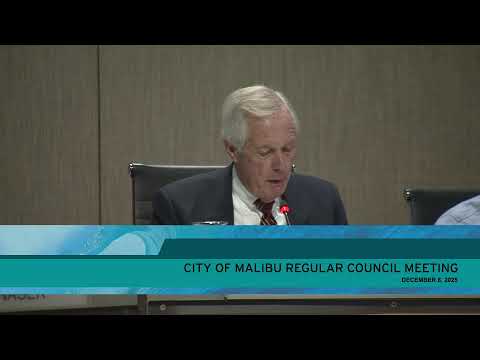
The Malibu City Council on Monday night authorized the interim city manager to execute three agreements with the Santa Monica–Malibu Unified School District that lay out the finances and structure for creating a separate Malibu Unified School District.
The vote followed a detailed presentation by Deputy City Attorney Christine Wood, who described a revenue-sharing agreement that allocates future property taxes between the successor districts, an operational-transfer agreement that addresses assets, liabilities and student-service continuity, and a joint-powers authority to administer annual property-tax transfers.
The agreements seek to guarantee Santa Monica a 4% annual growth floor for unrestricted revenue and to set protections for Malibu—s new district; the operational-transfer draft includes a minimum fund balance protection for Malibu of $7,500,000 to guard the new district during its transition. "This is not an immediate effort," Christine Wood said during her presentation. "This has taken years and generations." She told the council the agreements had been finalized and approved by the Santa Monica–Malibu Unified School District board the previous week and that the council—s action would allow staff to begin implementing the next procedural steps with county and state authorities.
The council heard more than an hour of public comment before the vote, nearly all in favor. Parents, students and local education advocates framed separation as long-standing local policy and argued that a Malibu-led district will prioritize local curricula and safety planning. "Local control over our children is a top priority," said Heather Alfano, a parent who brought her children to speak in support. Community education groups, the Malibu Education Foundation and AMPS leaders also urged approval.
Council members praised the long-running volunteer effort that led to the agreements and emphasized that additional approvals remain ahead. Wood told the council the agreements will be integrated into a statutory approval path that could require county and state approvals and possibly special legislation; she also said CEQA and other state processes may be involved. "We will not have a school district next school year," she said, adding that the goal is to complete required steps as quickly as the law allows.
What happens next: With council authorization, city staff will begin the administrative process with the district to incorporate the written agreements into the official reorganization filings, pursue required county and state approvals and prepare for any legislative or CEQA steps. The State Board of Education retains a role in the district reorganization timeline.
Authority and vote: The council voted unanimously to authorize the interim city manager to sign the three agreements; the roll call recorded Mayor Mary Ann Riggins, Council Member Steve Euring, Council Member Halen Conrad, Council Member Doug Stewart and Mayor Pro Tem Bruce Silverstein voting yes.
Funding details, allocation formula and the timeline for state approvals were described in staff materials and by legal counsel; the council—s authorization does not itself create new taxes or immediate revenues and further implementation steps were outlined as contingent on subsequent approvals.