Get Full Government Meeting Transcripts, Videos, & Alerts Forever!
Get email alerts on the Water Rates topic
No spam. Unsubscribe anytime.
LA County Water Works District 29 outlines rate study, warns customers bills could rise if proposal approved
Summary
LA County Water Works District 29 told the Malibu City Council its 2025 rate study found long-unaddressed capital needs and proposes a general rate increase — the first since 2012 — that could raise example monthly bills from about $227 to $306.17. Staff outlined capital projects, grants and next steps for a county hearing Dec. 16.
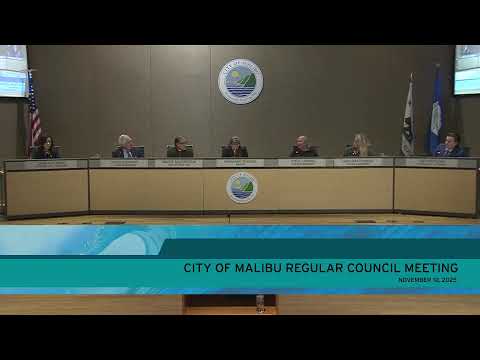
Carolina Hernandez, assistant deputy director with LA County Public Works, told the Malibu City Council on Nov. 10 that Water Works District 29 has not enacted a general rate increase since 2012 and that a new study recommends one to pay for mounting operation and capital needs.
"The last time Water Works District 29 had a general rate increase was in 2012," Hernandez said, and she gave an illustrative example: an average 1‑inch meter bill that now runs about $227 could rise to roughly $306.17 under the proposal, a $78.44 increase for that customer.
Hernandez and Bill Johnson, the district’s area engineer, described the scale of the system and the costs driving the study. District 29 serves about 22,000 customers, the staff presentation said, and operates dozens of reservoirs and pump stations. Staff told the council the district has spent about $28 million on projects over the last five years and is planning roughly $190 million of work over the next five years to upgrade mains, pump stations and other infrastructure.
The district also cited regulatory compliance and water‑supply costs as drivers of higher charges. Hernandez said purchase costs from wholesalers such as West Basin Municipal Water District are passed through to retail customers and that those pass‑through adjustments took effect beginning May 1, 2025. The proposed general rate increase would be considered by the Los Angeles County Board of Supervisors at a Dec. 16 public hearing, Hernandez said.
Council members pressed staff on details including how increases would be applied to different customer classes and whether businesses and multi‑family accounts would face different per‑meter charges. Hernandez said the rate design is largely based on meter size and quantity of water used, and that the same structure applies across customer types with bills scaled to meter capacity.
Councilmember questions also touched on contaminants and treatment costs. Asked about PFAS and other constituents of concern, Hernandez said District 29 receives treated water from wholesalers and does not currently foresee a contamination trigger that would require additional local action, but noted that any future mitigation by wholesalers would increase wholesale costs and be passed through to retailers.
Hernandez said the district has secured about $3.5 million in grant funding so far and has roughly $30 million in pending applications. She also said FEMA awarded the district about $1.2 million in a Hazard Mitigation Grant for additional generators and that the district has purchased generators and is pursuing more grant funding alongside a planned local match.
Next steps: the district’s general rate proposal will go to the county supervisors for a required Proposition 218 process and public hearing Dec. 16, during which customers can file protests. Hernandez encouraged residents to use the district’s dedicated website and bill calculator to estimate bill impacts for individual properties.
What to watch: county hearing on Dec. 16 and any formal protest filings; follow‑up council or community workshops on affordability options and potential exemptions or assistance programs.