Get Full Government Meeting Transcripts, Videos, & Alerts Forever!
Get email alerts on the Land Use topic
No spam. Unsubscribe anytime.
Malibu council introduces first‑reading package to convert two PCH properties to 17‑room bed‑and‑breakfast with strict conditions
Summary
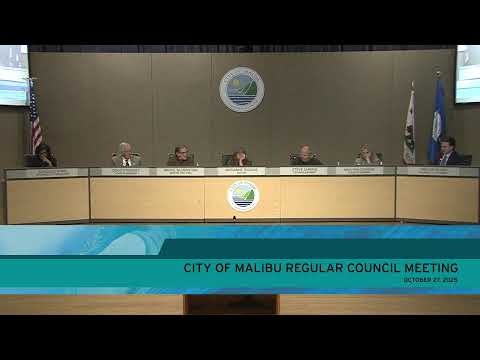
On Oct. 27 the Malibu City Council introduced, on first reading, a local coastal program (LCP) amendment and related coastal and zoning permits to convert two Pacific Coast Highway properties (22752 and 22762 PCH) into a 17‑room bed‑and‑breakfast. The council approved the package with tightened conditions on events, noise testing, nighttime trash use and a required in‑lieu fee.
The Malibu City Council on Oct. 27 voted to introduce on first reading a package of local coastal program and zoning changes to allow a 17‑room bed‑and‑breakfast operation that would span two existing Pacific Coast Highway properties, and approved related coastal permits, subject to tightened conditions.
Joseph Smith, the city’s contract planner, told the council the proposal would change both parcels from Community Commercial to Commercial Visitor‑Serving (CV‑1) in the Local Implementation Plan and general plan maps, and would authorize a coastal development permit and conditional use permit to convert an existing 16‑room motel and an adjacent health‑club/office into a single bed‑and‑breakfast operation with 17 guest rooms. Smith said the applicant would pay an in‑lieu fee for one net new room of $22,350 and had offered a voluntary supplemental payment to support lower‑cost overnight accommodations.
Applicant representative John Heinzleith described the proposal as “an intimate, small motel” focused on tranquility and guest stays, and said there would be no restaurant, no public bar and that pool and gym hours would be limited and reserved for staying guests. Heinzleith added that the owners “support no special events and no live entertainment” on the site and agreed to a nighttime cutoff for pool‑deck lighting and activity.
Neighbors and remote commenters pressed the council over noise, trash and the pool. One resident objected that bedroom windows sit about six feet from the pool deck and said he had photographic evidence of past pool use; city staff and the applicant replied the pool has been closed since 2017 and that any ambient music would be limited and subject to a noise study. City staff added a condition that neighbors be invited to observe and comment on any required noise testing.
Council members tightened several conditions before voting. The adopted package (first reading) narrows the applicant’s uses: special events and paid live entertainment are prohibited; on‑site parking must remain available for guests and staff; trash staging and dumpster use are restricted during nighttime hours; applicants must submit a parking plan for any future filming requests; and the city will collect the in‑lieu fee under Local Implementation Plan (LIP) Chapter 12 and hold the funds for low‑cost visitor accommodations.
The council motion passed on the first reading with the amended conditions. The package will return for a second reading and the city will forward the LCP amendment to the California Coastal Commission for certification; the CDP and CUP only take effect if the Coastal Commission certifies the LCP changes. The city clerk recorded the motion and the council vote as carried.
What’s next: the council scheduled a second reading of the ordinance and staff will file the LCP amendment for Coastal Commission review. If the commission requires any additional mitigation funding, staff said it will follow LIP process for handling the in‑lieu funds and report back to the council for any required action.