Get Full Government Meeting Transcripts, Videos, & Alerts Forever!
Get email alerts on the Petty Cash Audit topic
No spam. Unsubscribe anytime.
Petty‑cash audit finds misclassified accounts and control gaps; finance to reduce accounts
Summary
An internal audit found 25 petty‑cash accounts (totaling $16,637) with misclassifications, inaccurate balances, and instances of inappropriate reimbursements and weak segregation of duties; Knox County Finance will work with departments to close or reclassify accounts and consider P‑card substitutions.
Knox County internal audit presented a petty‑cash audit Jan. 29 that identified inaccurate and misclassified accounts, inappropriate reimbursements, and segregation‑of‑duties weaknesses across county departments.
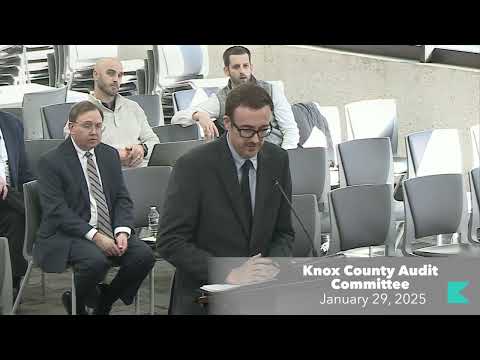
Philip Vincent, an internal-audit staff member who led the review, told the committee auditors identified 25 petty‑cash accounts in Munis totaling $16,637 and grouped by department. "We identified 25 petty cash accounts within our scope, totaling $16,637," Vincent said, and noted only seven accounts were actively used. The trustee’s office account was the largest balance, used primarily to make change.
Audit findings included: (1) inaccurate accounts (missing or incorrect balances and accounts not listed in Munis), notably in the health department; (2) misclassified accounts used as change funds rather than petty cash; and (3) inappropriate transactions, including reimbursements that included sales tax and at least one parking‑fine reimbursement tied to older activity. Auditors also flagged seven accounts with a lack of segregation of duties (the same custodian approving receipts and submitting check requests for multiple accounts). Internal audit recommended that finance reclassify or close misclassified accounts, codify allowable petty‑cash uses, segregate duties where feasible and substitute purchasing cards (P‑cards) for infrequently used petty‑cash accounts.
Chris Caldwell, Knox County Finance, said the finance department will work with internal audit and county departments to reduce the number of petty‑cash accounts and explore P‑card alternatives; he agreed to report back to the audit committee on progress. "We actually worked with [internal audit] to look into this for us... and so we'll reduce the ones," Caldwell said. The committee asked for a follow‑up at a future meeting listing which accounts were closed or reduced.
Management concurred with the audit recommendations and internal audit marked the findings as management‑concurred in the packet. The committee did not take an additional formal vote beyond accepting the audit presentation and directing follow‑up.