Get Full Government Meeting Transcripts, Videos, & Alerts Forever!
Get email alerts on the Burn Ordinance topic
No spam. Unsubscribe anytime.
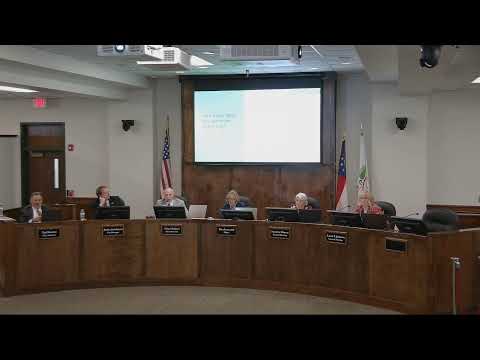
Peachtree City council tables proposal to allow burn permits for large lots after prolonged debate
Summary
After extensive public comment and council debate, the Peachtree City Council agreed to table an amendment that would allow burn permits for lots of a specified minimum size and to study options further before returning in February.
Peachtree City Council on a voice vote decided to table for further study an amendment that would restore limited outdoor burn permits for owners of large residential lots.
Councilwoman Suzanne Brown reintroduced the measure, proposing that properties of 1 acre or larger be eligible for burn permits under the earlier permit rules (daily permits, size limits, attended fires, extinguish at sunset). Brown said her goal was to reduce the financial and logistical burden on owners of heavily wooded lots who must otherwise pay commercial haulers or accumulate debris on site.
Multiple residents, including Kimberly Shainske, Stacia Bannerman and Randy Huff, told the council during public comment that large‑lot owners face substantial disposal costs and rodent or fire‑hazard risks from stockpiled brush. Huff, who said he has managed his 3.4‑acre property for 34 years, told the council, “I want to burn it. I’ve done it well for all its, 34 years.” Shainske and Bannerman urged a permit or exemption process tied to acreage and safety rules.
Council discussion focused on competing priorities: protecting residents with asthma and reducing smoke exposure in denser neighborhoods versus allowing cost‑effective debris management for large‑lot owners. Brown presented permit and parcel data from staff that showed roughly 1,720 Parcels would qualify at a 1‑acre threshold, falling to 155 parcels at a 3‑acre threshold. Council members asked for maps and for historic permit data to determine how many large‑lot owners actually used permits in prior years.
Several council members — including the mayor and Councilwoman Johnson — said the council’s May unanimous decision to implement a year‑round ban was driven by public health concerns about smoke, and noted the city’s fire marshal had advised that limiting eligibility by lot size would not eliminate smoke wafting. Councilman Holland proposed a stepwise compromise beginning with a 3‑acre exemption for a small number of properties as an interim measure.
After extended questioning of staff about permit‑system capabilities, enforcement, and locations of qualifying lots, Councilmember Holland moved and the council seconded a motion to table the measure until the first meeting in February so staff could provide maps, historical permit‑use data and implementation options. The motion carried by voice vote.
Next steps: city staff were directed to compile parcel maps, cross‑reference prior permit records with GIS parcel sizes and present options (including limits on the number of permit days and location‑based safeguards) for council consideration at the February meeting or retreat.