Get Full Government Meeting Transcripts, Videos, & Alerts Forever!
Get email alerts on the Emergency Communications Tower topic
No spam. Unsubscribe anytime.
Malibu Council upholds countyconditional-use permit for emergency communications tower with conditions
Summary
After hours of testimony on safety, health and process, the Malibu City Council voted 4-1 to uphold a Planning Commission approval allowing the County of Los Angeles to operate an emergency communications tower at the Santa Monica College Malibu campus, contingent on a recorded deed restriction, repainting to blend with surrounding structures, security measures and further technical review.
Malibu City Council voted 4-1 on Dec. 17 to uphold a Planning Commission decision granting a conditional use permit (CUP) for an emergency communications tower at 23525 Civic Center Way, part of the Santa Monica College Malibu campus, but added conditions intended to limit commercial use, reduce visual impact and require technical follow-up.
The council meeting drew lengthy public testimony from residents, public-safety officials and technical experts. Appellants asked the council to deny activation and require removal or relocation of the tower, arguing that the tower was built without proper permits, exceeds the permited 75-foot height in some respects, and that radio-frequency (RF) emissions and siting near classrooms were not properly analyzed. County and sheriffs office representatives said the monopole is essential for redundancy in Malibus emergency communications and that the structure had received multiple prior approvals and technical review.
Why it matters: Council members said they balanced competing priorities: residentsa0concerns about aesthetics, procedural transparency and potential exposure; and public-safety officialsarguments that the tower provides a necessary redundant link should the primary Saddle Peak site fail during fires or other disasters. The decision moves the tower from a contested construction to a conditional, regulated operational status while locking in limits on future use.
What was at issue: The appeal, filed by the Malibu Township Council, challenged the CUP approval by the Malibu Planning Commission on April 21, 2025. Appellants raised several points: that the countys RF modeling used an as-built height greater than the 75-foot limit in the original coastal development permit (CDP), that SiteSafe modeling cited in public presentations showed hazard zones in public areas, that alternative, lower-profile solutions (roof-mounted arrays, substation-mounted antennas or combined arrays) were not adequately evaluated, and that the public had insufficient notice and opportunity to weigh in on changes.
County and law-enforcement response: Zach Eidsick, representing Supervisor Lindsey Horvaths office, joined a county technical panel and said the project had long, multiagency review including an EIR certified in 2016, Division of State Architects plan checks, FAA coordination and Santa Monica College approvals. Captain Carr of the Los Angeles County Sheriffs Department told the council the monopole provides a critical redundant relay to Rancho Palos Verdes and would help maintain communications if Saddle Peak is lost, saying, "This monopoletower is a necessity for public safety in Malibu." County engineers also described modifications that would be made if the CUP is upheld: removal of FAA safety lights, repainting to a neutral shade, limiting antennas to heights compliant with the city resolution and recording a deed restriction limiting use for county emergency operations.
Technical testimony on RF exposure: Appellants cited third-party SiteSafe outputs and claimed very high percentage exceedances of FCC public exposure limits in some immediate zones. County radio-engineering staff, including the ISD technical lead, explained those figures describe fields immediately adjacent to transmitting antennas (within inches or a foot of an antenna), not ground-level public exposure. As the county engineer summarized in council testimony, rooftop-level exposure is below FCC thresholds and ground-level exposure is “below 1% of the FCC limit,” meaning publicly accessible areas are far below regulatory maximums; experts added that microwave dishes are highly directional and that a live RF test would be required once transmitters are installed.
Process, measurement and enforcement disputes: Speakers and several council members debated how height was measured (adjacent finished or FEMA-modified grade) and whether attachments such as lightning rods and temporary antenna mounts were counted in the 75-foot limit. Staff told the council that the original CDP and EIR authorized the development at the campus and that the CUP governs operation of the emergency communications facility; the county and college acknowledged a miscommunication about who would obtain the CUP prior to the towers construction and said construction stopped when the omission was discovered.
Council action and conditions: Councilmember Stewart moved to adopt the Planning Commissions recommended resolution approving the CUP, with changes the council negotiated. The Councils final conditions include: a recorded deed restriction limiting the towers use to the County of Los Angeles for county emergency communications and other county government emergency operations (explicitly prohibiting commercial leasing to private carriers); requirements to repaint the tower in a neutral color determined by the city (an ad hoc committee will advise city staff on color and finish); a security plan and fencing to be presented to the city; a required live RF verification test after transmitters are installed; and a requirement that the county follow steps to make the county substation operational (council asked the county to pursue activation but did not attach a definitive city-enforceable staffing deadline). The motion passed on roll call: Stewart, Riggins, Conrad and Silverstein voted yes; Earing voted no.
What happens next: The county can proceed with modifications and equipment installation subject to the CUP conditions; staff will work with county representatives on the deed restriction language, appearance and security plans. The council also directed staff to explore technical alternatives and to report back with options, recognizing that a full alternatives study would require a multidisciplinary consultant team (RF, structural, geotechnical and telecommunications engineers) and time and money to complete. Councilmembers said they would revisit the matter if consultants find a feasible, less intrusive solution.
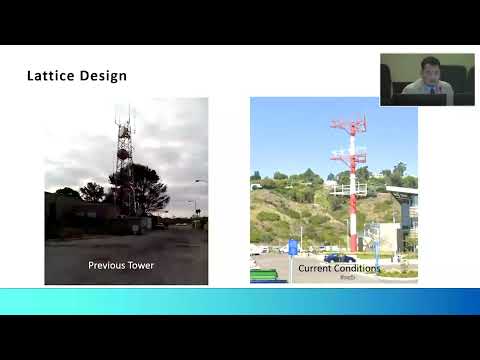
Context: The tower and campus were part of a 2016 project that included a CDP and EIR; installation of an emergency communications tower and a sheriffs substation followed construction of the Santa Monica College Malibu campus. The county contends the monopole is a modern replacement for an older lattice tower, while residents argue the new configuration is more visually intrusive and was not adequately disclosed or mitigated for public exposure and siting near classrooms.
Council minutes show the legal and technical conflicts are not fully settled, but for now the city's governing body has allowed operation under agreed conditions intended to protect public-safety capability while limiting commercial use and reducing visual impact.