Get Full Government Meeting Transcripts, Videos, & Alerts Forever!
Get email alerts on the Water Rates topic
No spam. Unsubscribe anytime.
Oceanside delays vote on proposed water, wastewater rate increases after public pushback; hearing continued to Nov. 5
Summary
City staff proposed a 6% annual water rate increase and a 4% annual wastewater increase for 2026–27; residents raised affordability concerns and questions about large pass‑through costs from the San Diego County Water Authority. Council voted unanimously to continue the hearing to Nov. 5 for more analysis.
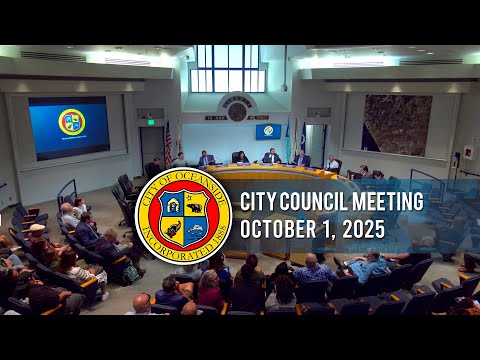
Mayor Sanchez and the Oceanside City Council on Oct. 1 continued a contentious public hearing on proposed water and wastewater rate increases after extended public comment and council questions about cost drivers and equity.
Staff proposed a 6% average increase in city water rates and a 4% average increase in wastewater rates for each of 2026 and 2027, along with adjustments to watershed protection and fire‑line charges and updates to external pass‑through charges from the San Diego County Water Authority (SDCWA) and the Metropolitan Water District. Assistant City Manager Michael Gossman said the changes would generate roughly $2.8 million (water) and about $2.0 million (wastewater) for operations and capital work and noted that roughly half of a typical single‑family customer’s monthly bill comes from SDCWA pass‑through charges.
The hearing drew more than a dozen speakers who described steep burdens on seniors and fixed‑income households and questioned unexplained spikes in individual bills. “You are taking seniors, and you’re making us become homeless,” said Gail Lacy of the Women’s Club of Oceanside, a retired resident who presented the club’s water bills as evidence of heavy fixed charges. Several residents described one‑time unexplained high bills and requested that the utility investigate billing anomalies and leakage detection for individual accounts.
Environmental and technical consultants explained that much of the near‑term increase visible to customers is driven by SDCWA and MWD increases rather than Oceanside’s internal rate component. Alex Bugby of Corolla Engineers told the council that, for a medium residential user, about $2.30 of an estimated $14.49 monthly increase in year one would come from Oceanside’s 6% increase while the remaining $12.19 was attributable to SDCWA pass‑throughs.
Council members debated alternatives. Council member Weiss said the city should consider drawing down existing fund balances or reprioritizing capital spending rather than passing the full increase to ratepayers; staff cautioned that cutting the city’s portion without a plan would require reductions in maintenance or delay critical projects. Mayor Sanchez argued the proposed rates were the minimum needed to maintain operations and fund near‑term projects that address aging infrastructure.
Rather than vote on the rates, the council unanimously approved a motion to continue the hearing to Nov. 5 so staff can provide additional analysis of the city’s portion of increases, the schedule and scope of planned capital projects, and potential mitigation for vulnerable ratepayers. Deputy Mayor Joyce asked that the record request that the San Diego County Water Authority be invited to explain its pass‑through charges; staff said they would request SDCWA’s participation but cannot compel attendance.
Next steps: staff will prepare supplemental materials for the Nov. 5 meeting showing the revenue impacts of alternative rate options, a timeline of major capital projects, and options for targeted customer assistance. The clerk read that 18 written protests had been filed (far short of the 23,781 protests that would constitute a majority under Prop 218), so the hearing may proceed if the council decides after the supplemental briefing.