Get AI Briefings, Transcripts & Alerts on Local & National Government Meetings — Forever.
Students urge Burbank board to reverse new summer-school limits that block core initial-credit courses
Loading...
Summary
Dozens of Burbank High students told the school board Dec. 18 that a new district policy barring many math, science, English and world-language classes from being offered for initial credit in summer school will force students to drop arts and activities, narrow college opportunities and stall four-year plans; district staff said counselors and instructional services identified preparedness concerns and equity and minute-count requirements constrained options.
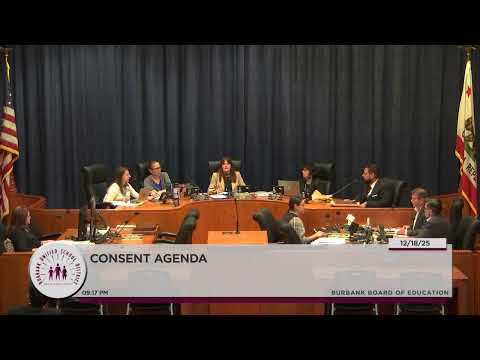
Dozens of students told the Burbank Unified School District board on Dec. 18 that a recent policy change barring many core courses from being offered for initial credit over the summer will reduce students’ ability to pursue arts, athletics and advanced classes during the regular school year.
"These summer school courses are not about remediation or makeup credit. They are about opportunity," Charlotte Hartwell, a senior at Burbank High School, said. Hartwell and other speakers said the limit on initial-credit offerings — described in district communications as excluding most science and English classes, most math levels except geometry, and all world languages — will force students to drop electives and extracurriculars to make room for required courses.
Riley O'Connor, a sophomore, told the board an email on Dec. 12 listed the prohibited courses and called the change a "blanket decision" that penalizes students who use summer courses to remain competitive for college admissions and to preserve time for arts and sports. "Students should not have to choose whether they want to be competitive or they want to do what they love," O'Connor said.
Board members and staff responded in detail. Superintendent Oscar Macias said the board did not make the decision and that counselors, instructional services and educational services participated in narrowing initial-credit offerings after staff observed that some students returning from short summer-online courses were unprepared for the next-level in-seat classes. "We wanted to make sure that the information that went out was explicit," Robin Anders, director of secondary education, said, noting particular concern in math and world language about preparedness and next-course rigor.
Administrators also cited equity and state instructional-minute rules as complicating factors. The district said 0-period classes taken before 8:30 a.m. do not count toward required instructional minutes under current state rules, which limits the district’s ability to expand early-morning options. Ms. Markinson, a district secondary administrator, said the district is trying to balance access with ensuring courses placed on transcripts meet district rigor standards.
Students and board members pressed for next steps. Student speakers asked the board to reverse the policy or seek alternatives; several trustees acknowledged the concerns and urged students to work with counselors to explore individual solutions. Member Olsen highlighted a related equity concern about sixth-grade tracking shaping high-school trajectories and said broader discussions — including graduation-requirements and scheduling alternatives such as block scheduling or legislative remedies — were warranted.
The superintendent said the district will continue dialogue with counselors, student leaders and staff. "You don't have to come and speak — speak to your principals, email us," Macias said, promising outreach and additional forums. Board members also discussed developing clearer communications and longer-term policy reviews that could align graduation requirements, state data and local school plans.
Next procedural step: staff invited students and counselors to provide case-specific information so the district can evaluate individual schedule impacts; the board did not take formal action to reverse the policy at the Dec. 18 meeting.