Get Full Government Meeting Transcripts, Videos, & Alerts Forever!
Get email alerts on the Public Health Education topic
No spam. Unsubscribe anytime.
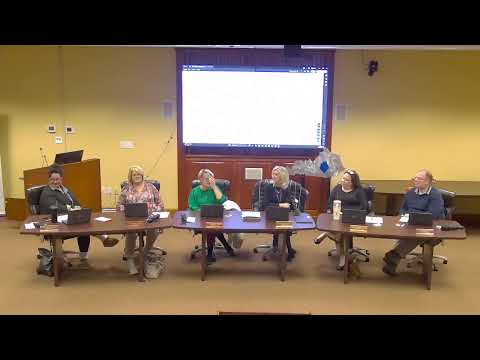
Rockcastle board OKs MOU with fiscal court to use opioid settlement funds to hire prevention counselor
Summary
Trustees approved an MOU with the Rockcastle County Fiscal Court to use opioid settlement funds (about $647,000 received to date) to fund a school-based prevention counselor and program across five schools; the fiscal court agreed to pay the position and the district will supervise programming and hiring.
The Rockcastle County Board of Education voted to approve an intergovernmental memorandum of understanding with the Rockcastle County Fiscal Court to use National Opioid Settlement funds for a school-based prevention counselor and program.
Dr. Ballenger told trustees the MOU and accompanying job description outline a prevention-focused role that will serve five schools and include a programming budget. He said the fiscal court had approved the arrangement earlier in the day and would provide the funding; the board will hire the position and the district will supervise programming and implementation. "This is one position for 5 schools," the presenter said when describing scope.
Board members and fiscal court representative Hal (identified in the transcript as Judge O'Brooke) said the county has received roughly $647,000–$648,000 in opioid settlement funds to date and that this MOU is an initial allocation to test a prevention model. One trustee emphasized the moral context when discussing the funds: "People had to die for those dollars to come to our community," a board speaker said, arguing prevention spending in schools is an appropriate use.
Trustees asked about salary and benefits for the position. The job was presented with a $100,000-per-year programming/salary figure in the discussion; presenters said the MOU includes a programming budget and training dollars in addition to salary and that the position would ideally hold a bachelor's degree and pursue prevention specialist certification per grant guidance. The board moved and approved the MOU and the related job description and FY26 salary schedule by voice votes during the meeting.
The transcript records voice approvals and no roll-call vote tallies; trustees discussed oversight, certification expectations and the need to monitor program effectiveness over several years as funds continue to be distributed.