Get Full Government Meeting Transcripts, Videos, & Alerts Forever!
Get email alerts on the Community Solar topic
No spam. Unsubscribe anytime.
Moline advances plan to lease 25-acre site for community solar, recommends Community Power Group
Summary
City staff recommended leasing 25 acres of the Boyd property to Community Power Group for a community solar field that would provide subscription savings to residents and modest annual lease revenue to the city; the proposal hinges on MidAmerican interconnection capacity and tax-credit deadlines.
City staff recommended the council pursue a land-lease model for a 25-acre community solar facility on the Boyd property and to move forward with Community Power Group as the preferred developer.
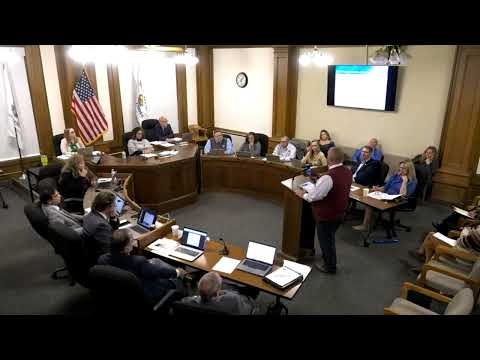
Shauna Jazzy, the presenter, told the council the city solicited interest from about 40 licensed Illinois developers and received four proposals from three qualified bidders. She said staff evaluated proposals on infrastructure, commitment to MidAmerican interconnection upgrades, and contract structure, and recommended Community Power Group — a Maryland-based developer with an Illinois project track record. "Based on the proposals that were reviewed, by the city of Moline staff and our company, we are recommending that the city move forward with a Community Power Group," the presenter said.
Why it matters: the lease model requires no up-front city capital, provides annual lease payments to the city, and allows municipal facilities and residents to subscribe to the field for utility bill credits. Jazzy described typical subscription savings as roughly "10 to 15% off of the utility price" for subscribers and said the developer would front the capital and operate the facility while paying the city lease revenue.
Key details and timeline: the recommendation sets a lease-rate example of $2,000 per acre on a proposed 25-acre site, which staff said would yield about $50,000 per year in lease payments. Contract terms discussed include an initial developer option period of 3–5 years and an operating contract term commonly proposed at 25 years with renewals extending up to 40 years; staff cited a 40-year illustrative total of roughly $3,020,900 in lease payments over that full term as discussed in the presentation. The presenter also noted a range of per-acre lease proposals ($1,200–$2,500) with annual escalators of 1–2%.
Policy and technical constraints: staff stressed that interconnection capacity and MidAmerican cooperation are gating issues. Jazzy said there appears to be roughly 5 megawatts of immediate interconnection capacity available and that MidAmerican would need to be a partner for billing and crediting mechanisms and any needed upgrades. She also highlighted federal and state tax-credit deadlines and construction milestones that affect project economics and timing, warning that missing certain requirements could reduce the investment tax credit and change the project's economics.
Design and operations: proponents included agrivoltaic and native pollinator ground-cover options among potential site treatments to reduce visual impact and support pollinators; designers also proposed low-permeability screening and fences that allow wildlife access. Staff noted grazing (sheep) was a potential vegetation-management approach to consider during later contract negotiation.
Next steps: staff proposed returning a formal draft lease and contract for legal review and subsequent council action with additional detail on subscription allocation, estimated resident savings and finalized interconnection commitments from MidAmerican. Jazzy said staff can provide modeled savings estimates for residents and municipal accounts before the agreement returns for council consideration.
Quotes from the record: "We received 4 proposals from 3 qualified bidders," the presenter said during the overview. On utility coordination, she said, "MidAmerican will need to be a partner on this project because this will be one of the first community solar projects in MidAmerican service territory."
What’s next: staff will refine the lease agreement, confirm interconnection scope with MidAmerican and return a contract to the council for legal review and approval at a future meeting. The council did not take an immediate vote on a contract at this meeting.