Get Full Government Meeting Transcripts, Videos, & Alerts Forever!
Get email alerts on the Public Safety Lpr topic
No spam. Unsubscribe anytime.
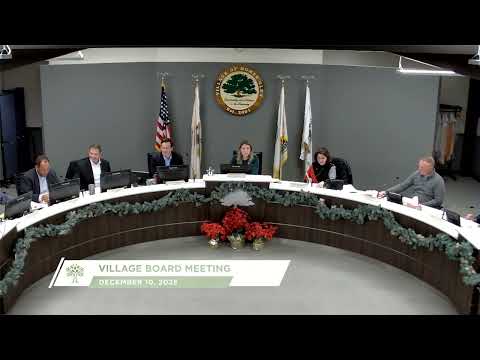
Homer Glen trustees approve Flock Safety license-plate camera program after heated debate
Summary
After a night of public comment and trustee debate, Homer Glen trustees approved a proposal to install 12 Flock Safety license-plate readers with cloud hosting and a one-time installation cost, amid assurances of local safeguards and dissent from privacy advocates.
Homer Glen trustees voted to accept a proposal from Flock Safety to install 12 license-plate–reader (LPR) cameras with solar poles and cloud hosting after an extended public comment period and lengthy board discussion.
Supporters — including a former police chief and several trustees — said LPRs are a targeted investigative tool that can help locate stolen vehicles, assist in serious investigations and locate missing persons. Trustee Schaller, who spoke in favor of the program, urged that any agreement include strict local guardrails: limited personnel access, logging and audits of searches, and short automatic retention periods unless tied to an active investigation. "With the right policy, it's not a general tracking system," the trustee said.
Opponents and many residents raised privacy and constitutional concerns during the public-comment portion. Resident Tim McGraw, a Homer Glen resident of 46 years, said the system amounts to "mass surveillance," argued the company (not the village) would own data collected by Flock, and warned the program could enable widespread tracking without warrants. "There is no version of this technology that is compatible with American freedoms," he said.
The board also heard testimony from residents who said LPRs had helped solve local crimes and locate vulnerable missing people. Michael Lasik described a string of vehicle break-ins and a home intrusion and said LPRs would have been useful in earlier incidents. Trustee Reinders recounted an incident that occurred earlier the same day — a reported home invasion — and said having LPR coverage in the village could have accelerated an arrest.
Village attorneys and trustees cited state law and existing local-policy options, saying Illinois law treats certain ALPR (automated license plate reader) records as law-enforcement information and allows municipalities to adopt local safeguards. The village attorney also noted that some municipalities had removed LPR systems after weak controls led to unauthorized data-sharing, arguing that Homer Glen can adopt stronger rules to reduce those risks.
After debate and an unsuccessful motion to table the item, the clerk called the roll on the Flock proposal and the motion carried. The board made the supporting letters (including one from Orland Park Police Chief Eric Rossi) part of the record. Trustees who spoke in favor emphasized that local policy must explicitly limit access, define retention periods, and require audits so the system provides investigatory value without becoming broad surveillance.
What happens next: The board approved the purchase and directed staff and legal counsel to finalize vendor terms and local policies intended to restrict access, shorten retention and require auditing before cameras go live.