Get Full Government Meeting Transcripts, Videos, & Alerts Forever!
Get email alerts on the Land Use Rezoning topic
No spam. Unsubscribe anytime.
Chandler council unanimously denies Price Road Innovation Campus rezoning after hours of public opposition
Summary
After more than five hours of public testimony and council discussion Dec. 11, the Chandler City Council voted unanimously to deny rezoning and a development agreement that would have allowed an AI data center and tech park at 3380 S. Price Road, citing water, power and general‑plan concerns.
Chandler’s City Council on Dec. 11 voted unanimously to deny a rezoning and development agreement for the proposed Price Road Innovation Campus, a 40‑acre plan that would have converted the former Orbital/Northrop Grumman site at 3380 S. Price Road into an AI data center and a five‑building tech park.
The decision followed lengthy staff briefings, presentations by the developer and hours of public comment — most of it opposed. Councilmember Harris moved to deny items 37 and 38, a motion seconded by Councilmember Orlando; the council then voted in favor of the denial on a unanimous roll call.
Why it mattered: the project would have allowed a standalone AI data center as a primary use under a Planned Area Development (PAD) zoning, added a mid‑rise overlay permitting buildings up to 90 feet tall and committed the developer to multiyear construction and infrastructure obligations. Supporters argued the proposal would generate construction activity, new tax revenue and targeted technology jobs; opponents said it ran counter to the corridor’s voter‑backed general plan, risked straining regional water and power resources and would produce too few long‑term jobs compared with other allowed uses.
What staff and the applicant told the council: Planner David De La Torre said the application sought PAD rezoning to permit a 422,877‑square‑foot data center in Phase 1 plus speculative R&D/office buildings in later phases, and noted the city’s 2022 data center ordinance requires PAD review for standalone data centers. Economic development director Micah Miranda outlined fiscal commitments in the draft development agreement, including employment minimums, median wage targets, penalties for missed building milestones and a requirement that property tax and transaction privilege tax revenues not decline because of incentives in the deal.
City water staff Simone explained how the city’s sustainable‑use policy frames allocations for the site and said the data center would have a Tier‑1 allocation with a stated maximum of roughly “48,000 gallons per day at a maximum” for the data‑center allocation and that closed‑loop mechanical cooling would be required under the agreement. Simone also said current evaporative systems on the vacant site use about 1,000,000 gallons per month and that the agreement obligates removal of those chillers during demolition.
The applicant, represented by attorney Adam Baum and Active Infrastructure CEO Jeff Sigler, emphasized contractual protections negotiated with staff. Baum said the development agreement “prohibits any other form of water cooling but the mechanical system” and committed to removing the three existing 3‑inch meters, installing a 1‑inch meter for ongoing operations, undergrounding power lines, and prepaying $2 million toward utility relocations. The applicant also outlined fines and milestone penalties to encourage construction of the tech‑park buildings if the data center proceeded.
Public reaction: Council received over 200 emailed comments in opposition and dozens of in‑person speakers. Residents raised water‑use and Colorado River allocation concerns, potential SRP (Salt River Project) rate impacts and the project’s alignment with the Price Road corridor’s long‑term general‑plan vision for high‑wage, job‑dense uses. Students, teachers, union representatives and neighborhood residents urged the council to preserve land for housing, manufacturing or research uses that create more local jobs. Supporters including the Arizona Technology Council and building trades representatives argued the site’s redevelopment and union construction jobs would benefit the region.
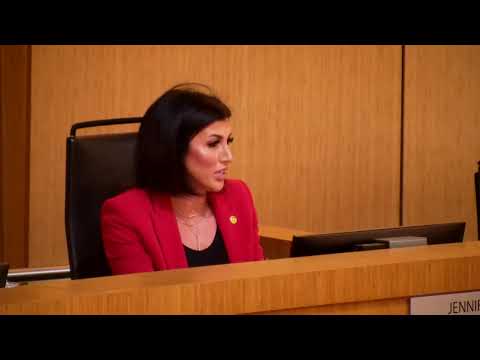
Council rationale: During deliberations several members — including Harris, Orlando and Poston — said the developer and staff had negotiated strong protections but that uncertainties remained about long‑term customers, power delivery timelines and whether the use fit the voter‑adopted general plan for the Price Corridor. Harris framed the decision as a defense of the corridor’s purpose and resident concerns. Councilmember Orlando said he had wanted to support the project but could not resolve the business case questions about customers and the multi‑year gap before full power delivery. Vice Mayor Ellis and other members commended staff work but said the site and the proposal were not the right fit.
Next steps: With the denial, the proposed PAD rezoning and development agreement are not approved and the site remains under its previous zoning. The council did not adopt alternate motions to return the item for revisions that night. Staff and the applicant may decide next steps, which could include revising the proposal, relocating components, or pursuing a different entitlement pathway. The council closed the meeting with routine announcements and holiday remarks.
Vote: Motion to deny items 37 and 38 carried unanimously.