Get Full Government Meeting Transcripts, Videos, & Alerts Forever!
Get email alerts on the Cannabis Ordinance And Zoning topic
No spam. Unsubscribe anytime.
Caribou planning board seeks fixes after councilpassed cannabis ordinance creates zoning, licensing conflicts
Summary
At a planning board meeting, members flagged inconsistencies between the City Councilpassed changes to Chapter 13 and existing Chapter 7 licensing rules, raising legal and fairness concerns over a provision that limits registered dispensaries and removes council-level public hearings. The board will recommend edits ahead of a Jan. 8 public hearing.
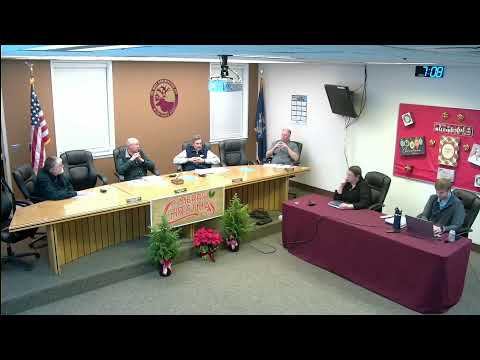
At a Caribou Planning Board meeting, members reviewed a consultantdraft that aligns municipal language with recent state cannabis definitions and found the councilpassed changes left Chapter 7 (licensing) and Chapter 13 (land use) out of sync, creating zoning and process conflicts that could prompt legal challenges.
The board discussed how the draft uses the term "registered medical cannabis dispensary" to match state terminology and noted a new state definition for "caregiver retail store" that altered what had previously been treated as a caregiving activity rather than a retail operation. "No caregiver retail store permitted," said Speaker 4, reading the draft restriction that participants found stark and potentially confusing when read alongside other sections.
Why it matters: the draft limits the number of locally authorized registered dispensaries and removes an explicit council-level public hearing for renewals, shifting some approvals to administrative review. That combination, several members warned, could be interpreted as giving priority to specific, already-operating businesses and expose the city to fairness or spot-zoning claims. "If your paperwork is complete, you're issued your license," Speaker 2 said, summarizing the administrative licensing path included in the consultantdraft.
Board members reviewed local history in the region: Safe Alternatives, an operation that moved into Caribou after earlier state licensing, was described as being handled under prior municipal rules; another local operator sought changes after state enforcement found the operators activities inconsistent with a caregiver license. A consultant letter included in the packet recommended treating existing dispensaries as grandfathered and suggested the ordinance could give priority to existing operations while leaving room for a fair selection process for new applicants. "Since Safe Alternatives operation is grandfathered, the ordinance could give priority to existing dispensaries," said Speaker 3, quoting the consultant summary.
Points of contention included whether the ordinance can lawfully cap locally authorized dispensaries at two, how to handle renewals and inspections, and whether permitting language belongs in Chapter 7 (licensing) rather than Chapter 13 (land-use). Speakers also flagged public-safety and tax-assessment concerns tied to caregiver operations and to how the state shares licensee information with municipalities.
What the planning board will do next: members agreed to ask Northstar Planning (Ben Smithidentified in the meeting transcript as the consultant) to reconcile the draft so Chapter 7 and Chapter 13 use the same definitions and to clarify whether renewals should follow a public-hearing process similar to liquor licensing. The board discussed adding procedural language for a publicized application period and an impartial selection mechanism (lottery or advertised competition) if additional authorizations become available.
A public hearing was noted on the city calendar for Jan. 8; the board said it will prepare a formal recommendation to the City Council that would (a) restore or clarify where licensing rules belong (Chapter 7), (b) clarify the grandfathering/nonconforming-use treatment for existing operations, and (c) add explicit, fair selection procedures for any future openings. The meeting transcript did not include a calendar date for the planning board meeting itself.
The planning board did not take a formal vote on ordinance language during the meeting; members ended the session with direction to produce recommended edits and to return with a redline that reconciles terms and process before the Jan. 8 hearing.