
Board upholds nuisance notice for ‘Music Village’ property but allows limited self‑abatement timeline
Summary
After code‑enforcement staff documented unpermitted structures, RVs and event infrastructure at 9685 Nancy Drive (Kelseyville), the board upheld the notice of nuisance but offered the owner a phased self‑abatement schedule: remove immediate health and safety hazards within two weeks and complete full abatement within two months or staff will proceed to abate.
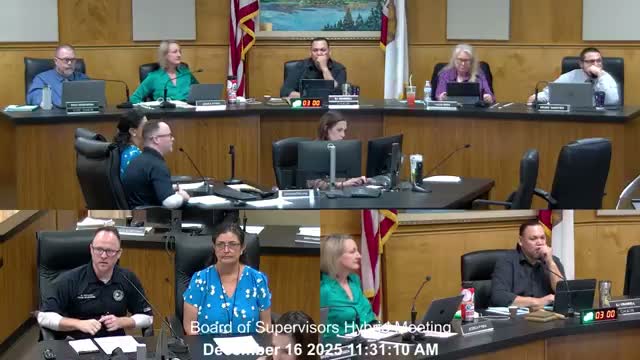
Lake County's Board of Supervisors on Dec. 16 upheld a notice of nuisance for a Kelseyville property known locally as "Music Village," but gave the owner limited time to self‑abate before the county initiates formal abatement.
Code Enforcement Manager Marcus Beltramo told the board staff had received repeated complaints since 2019 and documented multiple unpermitted structures, recreational vehicles occupied on a longer‑term basis, a stage and related sound/electrical equipment, porta‑potties on site beyond the county's 30‑day allowance, cargo containers and other outdoor storage on land zoned as rural lands. Beltramo said environmental health confirmed there was no permitted septic and that planning staff had concluded a use permit would be required for the music/event activities planned on the site.
Property owner Victor Hall responded in person, said the site had been significantly improved since he acquired it, and described the project as an educational/music program for children. Hall told the board he planned to stop events at the site and said much of the infrastructure "is already in the process" of being removed and that an alternate site had been identified.
The board and staff discussed safety problems associated with unpermitted electrical and dense gathering during high fire threat season, reports of three emergency calls for overdoses in 2025 tied to events, and the high cost to the county of forced abatement. Code staff recommended upholding the notice of nuisance and moving forward with abatement procedures unless the owner completed self‑abatement.
The board's order set phased conditions: the property owner must remove any items that present a direct threat to health and safety (including electrical hazards) within two weeks and complete full abatement consistent with the notice of nuisance within two months. The order also notifies the owner that if these conditions are not met, staff will proceed with county abatement and cost recovery (administrative fines will continue to accrue). During discussion supervisors emphasized monitoring compliance and the county's discretion to extend or proceed to abatement if sufficient progress is not made.
The owner indicated willingness to self‑abate and offered an earlier timeline in public comment; county staff said certain items (RVs, trailers, unpermitted electrical) could be removed immediately and recommended phased deadlines to reduce public‑safety exposure.
Outcome: Board upheld the NO N O T A and approved an order allowing phased self‑abatement (2 weeks for immediate hazards; 2 months for full abatement), subject to monitoring and possible county abatement if deadlines are not met.

Create a free account
Unlock AI insights & topic search