Get Full Government Meeting Transcripts, Videos, & Alerts Forever!
Get email alerts on the Grants topic
No spam. Unsubscribe anytime.
Decatur City staff propose centralized grant policy, recommend not applying for awards under $10,000
Summary
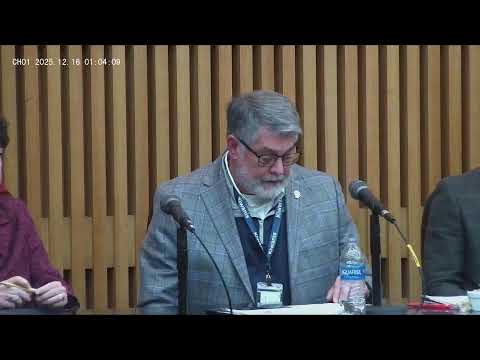
Community development manager Alan Stover told the Decatur City Council the city handles more than 20 grants and is proposing a centralized grants policy that would generally rule out applying for grants smaller than $10,000 and require earlier coordination with finance to avoid unanticipated city obligations.
Alan Stover, community development manager, told the Decatur City Council on Dec. 1 that the city manages more than 20 grants annually and needs a clearer internal process to avoid unanticipated obligations. “As a policy, we’re not going to apply for anything less than $10,000,” Stover said, arguing the administrative work for small grants often outweighs benefits.
Stover told the council that Decatur is an entitlement community for Community Development Block Grant funding and that city staff carry both HUD-related programs and more than 20 other grant awards, sometimes exceeding $20 million in total. He said the department currently operates with a small team — one grants administrator, an administrative specialist and Stover — and that centralizing applications would reduce duplication across departments.
The proposed policy would require departments and outside partners to notify the community development office and finance “on the front end” of potential grant opportunities so staff can assess timing and match obligations. Stover said some partners bring forward “no-match” grants that nonetheless could require the city to provide matching funds, staff time or ongoing maintenance, creating hidden future obligations.
Council members asked about typical timelines. Stover said some application windows leave as little as two weeks to assemble a council agenda item, and more complex grants can require months of preparation. A council member suggested a tiered timeline — three weeks for simple, no‑match grants and longer for projects requiring studies. Stover agreed budget, project scope and potential maintenance commitments would guide the city’s decision to pursue or decline an opportunity.
The presentation did not propose an immediate council vote; rather, staff asked the council to adopt guidelines that would (1) generally decline small grants under $10,000, (2) require early notification to community development and finance, and (3) use the single-audit and finance review as part of grant vetting going forward. Stover invited council members and department directors to call him or Dane (staff mentioned during the presentation) for early coordination.
Staff plans to bring a formal written policy to a future meeting for council consideration and possible adoption.