
School committee tables draft AI policy after detailed debate, sends it back to task force
Get AI-powered insights, summaries, and transcripts
Subscribe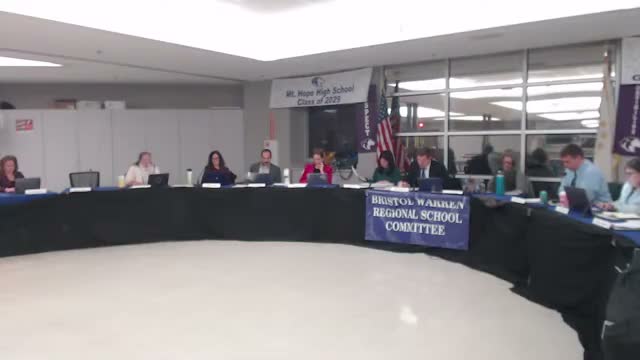
Summary
After extensive discussion about scope, ethics, data privacy and enforcement, the committee declined to adopt the district’s draft AI policy and voted to send the draft back to the AI task force and policy subcommittee for further work.
A proposed district policy on the use of artificial intelligence in instruction and on district systems was the most contested item at Monday’s meeting. The policy, developed by the AI task force and reviewed by the policy subcommittee, drew wide discussion among committee members about scope, developmental appropriateness, data privacy, and enforceability.
Task force co‑chair Miss Caldwell summarized the rationale for an initial policy framework, explaining it was designed to set expectations while the district pilots use cases in classrooms and trains teacher fellows through a partnership with Fuse. Supporters said a policy should be a living document and be reviewed regularly as AI tools evolve.
Several committee members asked for greater clarity in multiple areas: whether the policy limited students’ personal use of AI on personal devices versus district devices; how schools would define and enforce 'developmentally appropriate' uses for different grade levels; whether the policy’s academic‑integrity language would be enforceable; and more robust guidance on personally identifiable information (PII) and data governance. Members also questioned the practicality of attribution requirements that would obligate users to name tools and indicate the nature of AI assistance.
An initial motion to adopt the draft policy failed (vote recorded as roughly 2 in favor, 7 opposed). The committee then voted (7–2) to table the draft and return it to the AI task force and the policy subcommittee for revisions that address the issues raised — including clearer developmentally appropriate guidance, expanded PII examples, and reconciliation of scope language concerning students’ personal accounts.
Next steps: the AI task force and policy subcommittee will revise the draft to include more explicit guidance on developmental appropriateness, data privacy/PII protections, scope limitations (district vs. personal devices), and enforcement expectations; revised language will return to policy subcommittee before a committee level vote.