Get Full Government Meeting Transcripts, Videos, & Alerts Forever!
Get email alerts on the Workforce Training Policy topic
No spam. Unsubscribe anytime.
Senator introduces 'Door to Work Act' to let states pilot one-stop offices for job training and safety-net services
Summary
A senator told a committee he introduced the Door to Work Act to let up to five states pilot consolidated "one-stop" centers that co-locate unemployment help, housing vouchers, TANF, food stamps and job training; a Louisiana official backed the idea but warned staffing must be adequate.
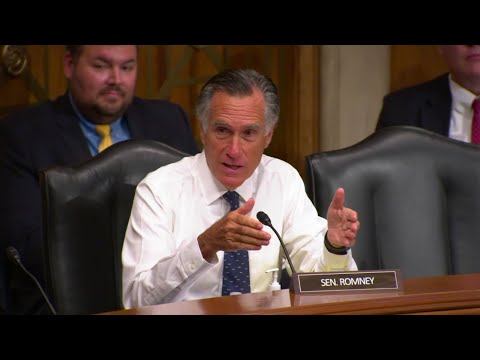
A senator told a committee he has introduced the "Door to Work Act," a bill that would let as many as five additional states pilot a single "one-stop" office where workers who lose jobs can access unemployment resources, housing vouchers, Temporary Assistance for Needy Families (TANF), food stamps and job training.
The proposal is meant to simplify what the senator described as a confusing patchwork of federal programs. "I have introduced a piece of legislation which is known as the Door to Work Act, which would allow as many as 5 other states to be able to also do what Utah does, which is have a 1 stop place where individuals can go to get, help with unemployment, housing, TANF, food stamps, as well as job training," the senator said.
Why it matters: committee members and witnesses said displaced workers can struggle to navigate multiple programs. The senator noted there were "49" federal job-training programs at one point, and argued that fragmentation can overwhelm jobseekers. Doctor Bly Jones, called for comment, described the existing response structure: rapid-response teams notify and meet workers at firms facing layoffs and refer them to American Job Centers that serve as local access points for workforce services.
Doctor Bly Jones explained the typical flow: "Usually, what happens is it's a rapid response team that goes out, and they are notified at the state level, when an employer is actually facing a layoff of individuals. And so a rapid response team is sent out to that employer to talk to individuals about the resources that exist." She said American Job Centers are intended to connect jobseekers to services, though she acknowledged limits in what those centers directly provide.
The senator and witnesses clarified that American Job Centers do not themselves administer unemployment insurance, TANF or housing vouchers, but can function as referral and coordination points. The senator pointed to Utah's program, credited to Governor Mike Levitt, as an example: he said Utah was grandfathered to colocate services that federal rules otherwise prohibit other states from doing.
Mister Dickerson, describing Louisiana's Workforce and Social Service Reform Task Force, said his state supports the one-stop idea but emphasized implementation challenges. "That's the work of our Louisiana workforce and social service reform task force that was put together by the governor and our secretary of workforce and department of child and family services as well," he said, adding that "one challenge ... is to make sure that those one-stop centers are appropriately staffed to accommodate all of those services and that those staff members are educated so that when that individual does come in, they not only get access to the services, but the service delivery mechanism is there to meet them."
The senator said Utah assigns a caseworker to newly unemployed individuals to coordinate both safety-net services and a workforce plan, and said several members of the committee—including the ranking member—support allowing a temporary pilot in other states. He noted Louisiana and Texas among states that have expressed interest. There was no recorded vote on the proposal during the exchange.
Next steps: the senator presented the Door to Work Act as an option for pilot testing; committee members signaled support but witnesses raised questions about staffing and training at consolidated centers. No formal action or vote was recorded in the transcript excerpt.